
- Cutting-edge tech matters
- Concept and white paper
- Wallet and investor dashboard
- Initial offer (ICO, IEO)
- Marketing per owner need
- Listing on exchange platforms
How Much Does Cryptocurrency Cost To Build From Apps To Exchanges: A Field Guide To Not Going Broke
17 September, 2026
0 comments

How Much Does Cryptocurrency Cost To Build From Apps To Exchanges
You're probably wondering how much does cryptocurrency cost to build. Good. Wondering is free; building is not. I stared at a dev quote once and felt my soul leave my body, so I get it. A wallet can run you two to twenty-five grand, a basic exchange often seventy grand and up, and payment gateways are all over the map. We lay out the real price ranges so you can panic in an informed way.
Crypto is a virtual and digital money that is kept safe by cryptography. This makes it hard to spend the same coin twice. Many coins run on blockchain, which is a shared network that records trades. You don't hold a paper bill or a metal coin. The screens are made simple so a new person can start trading fast with a low learning curve.
What Crypto Is Before You Spend
Bitcoin showed up in 2009 and the whole history of crypto began there. Right now there are more than 10,000 coins that people trade. Each one has a different value that moves with supply, demand, and news. Crypto is not run by any government or bank, which is why it feels like an alt way to use money.
Over 82 million people have signed up for a crypto wallet app for Bitcoin, Ethereum, Tether, and other coins. That tells you a lot of regular folks are in this. When the issue arises of how much cryptocurrency costs, the answer is long and has many parts. A person should first get what crypto is and how a coin is made before they burn cash.
Why People Build Crypto Stuff
You do not need to hire a pro to make a coin. If you're not tech-savvy, you can still make a crypto on a budget because of mining, hashing, and consensus algorithms you can find online. But if you don't know what those are, you can overspend on things you don't need. Know the tech before you start.
Steps in a crypto build
The budget splits into parts. Consulting is 5%. Design is 15%. Development is 35%. QA testing is 25%. Deploy is 5%. Marketing is 15%. Upkeep is 15 to 20% of total. These can add to 100% if you pay for extra tools or services.
Crypto Wallet Build Cost
A crypto wallet is a long-term bet. A business can earn from trade fees, coin swaps, and ads. All coins live in a wallet. It holds your private keys so you can send and get funds. Users trade with each other and the wallet proves the funds are yours.
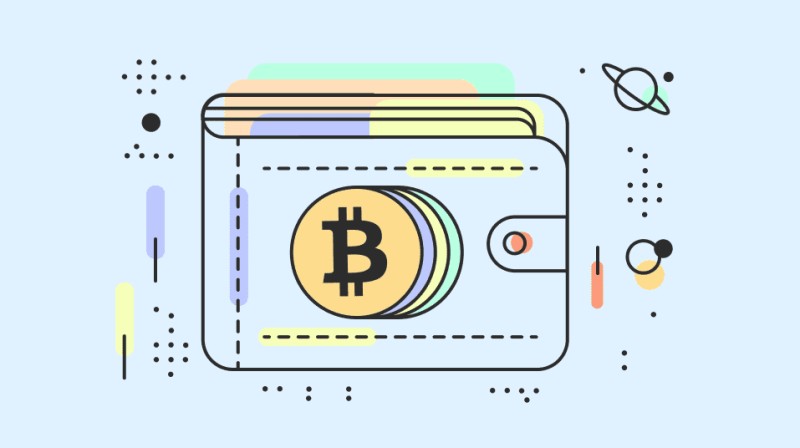
There are two setups. Custodial means a third party holds your keys and helps with recovery. It is cheap per trade but needs internet. Non-custodial gives you full control. You must remember a seed phrase of 12 to 24 words. Lose it and your crypto is gone for good. That is why I always say a safe crypto wallet is the one where you actually guard the phrase.
Wallet types from dev side
- Web apps you open in browser
- Mobile apps you install
- Desktop software on your PC
- Hardware USB device
- Paper with printed QR codes
If you want a good digital crypto wallet or you ask what a cold wallet is , it is the hardware or paper kind that stays off the net. A cold wallet is the quiet one. Hot wallets stay close to the net and are easy but more exposed. For how to get a blockchain wallet , you pick a type and either install it or buy the device.
Key wallet features: login with two-factor auth, many coins supported, push notes, live price updates, paper wallet import, and fast in-app sends. If you wonder which wallet is safest , the answer is the one with these locks and your own backup. And to safely store crypto you keep the seed phrase offline and never type it on a weird site.
Non-custodial wallets guarantee full control over your funds. If you lose the mnemonic phrase, you lose your cryptocurrency forever.
What Drives Wallet Price
Four things change the cost. Dev model: white label is cheaper and faster, custom is built from zero. Features: more stuff means more money. Number of coins: each one takes time to add. Consensus method: proof-of-stake, proof-of-work, and others shape the build.
Team size matters a lot. A small team of 10 to 100 costs 2k to 25k. Mid-size of 100 to 500 costs 25k to 200k. Large over 500 costs 200k to 1.5M. A mid-size team at common rates adds up to about 105k for a standard wallet app. Eastern Europe gets named as a good spot for high-end work at fair price.
Crypto App Build Cost
An app can be just a wallet, just an exchange, or a mix. Coinbase started as an exchange and added a wallet, trading tools, and even a card. Revolut lets you do normal money stuff and also buy coins. You don't register just for crypto, but it's there when you want it.
Before you build, pick your path. Think about your model and your cash. If you need help, talk to a biz consultant. The app needs user accounts, a trade system, push notes, an admin panel, and strong security. Security means two-factor, encryption, and KYC/AML checks.
App build steps
- Workshops to map the idea
- UX and UI design
- Development of backend and front
- Testing for safety and speed
- Release and marketing
- Maintenance after launch
Budget ranges for crypto apps fall in bands: 0 to 40k EUR, 40k to 80k EUR, 80k to 120k EUR, and over 120k EUR. You don't need all products at once. Maybe a web app first, then mobile when users show up. If you're hunting a top wallet application , the big names show what good looks like.
Crypto Exchange Build Cost
Two kinds of exchange sit in the market. Centralized (CEX) is the common one where you trade through a company. Decentralized (DEX) lets you swap direct from your wallet with no middle man. Both need care or users leave fast.

A basic MVP for an exchange runs 70k to 150k. Mid-tier with dashboards and compliance is 300k to 800k. Enterprise built for big volume often passes 1M. The cost shows choices in UX, onboarding, and who you target, not just coder hours. Spend on clean design early or pay later in lost users.
A trader faced with a confusing onboarding process, unclear error messages, or a messy dashboard during a market spike will leave, taking liquidity with them.
Exchange Models And Price
CEX cost: lean MVP 150k to 300k, mid-tier 300k to 800k, enterprise 1M plus. DEX cost: basic 80k to 250k, advanced 250k to 600k. P2P cost: focused MVP 70k to 200k, full with escrow 200k to 400k. Each model has its own risk and work load.
Model trade-offs
- CEX: high rule risk, full custody
- DEX: smart contract risk, less custody
- P2P: fraud risk, shared custody
- CEX has high UX complexity
- DEX needs clear fee display
- P2P needs good dispute tools
If you want to find the top crypto exchange in the usa or other places to buy cryptocurrency , look at Coinbase, Binance, and Kraken. They use hard verify steps. New builders should learn from them. For the best trading platform for cryptocurrency , the answer depends on if you like simple or pro screens.
Founders who chase the lowest number build the platform that proves why it was a mistake.
Hidden Exchange Costs
Late UI fixes hurt. A rule change can force a rebuild that costs 75k and two months. A clunky signup can drop 40% of users before they finish. Mobile and web mismatch can cut daily volume by 25%. Weak look sends a message of amateur hour and a 100k rebrand is a rough lesson.
Payment Gateway Build Cost
A crypto payment gateway starts around 20k and goes to 100k for core parts like multi-wallet, fiat swap, APIs, merchant screen, live trades, and security. Some use pre-built modules and start as low as 8,450 with no license fee and full code owner. Cheap path exists if you don't need much custom.
Custodial vs non-custodial changes the build. More coins and chains mean more work. Region rules matter: USA treats gateways as MSB under FinCEN; Europe wants PSD2 and strong auth. Recurring costs are upkeep, gas fees, hosting, and rule updates.
Making A New Coin Or Token
A coin gives freedom but costs more to build and maintain. A token is cheap, built on an existing chain, no own nodes. A token contract can cost 3k and rise to 45k with hard logic. If you make a coin yourself, it can be free if you do the code and use your own hardware.
Rates: front and back dev about 70 per hour, solidity dev 81 to 100, UX designer 40 to 50. Legal help to make a coin runs 200k to 300k. QA testers about 107k per year. Marketing: social posts 30 to 100 each, site about 1k, white paper 1,500 to 6k. Total to build a new cryptocurrency with all help can hit 145k plus.
ICO launch parts
- White paper
- Smart contract
- Website
- ERC20 token
- MVP
- Security audit at 3k
- Security specialist about 10k
You can save by hiring an outside team with experience. They map your needs and build a plan. A white label gateway starts at 7,950. Custom from scratch starts at 18,500. Either way, know the budget split: consult 5, design 15, dev 35, QA 25, deploy 5, market 15, upkeep 15 to 20.
Stable Coins And Volatile Coins
Bitcoin is great for send but the price swings hard. Holders have lost big in short spans and the price can jump or drop 25% in a week. Stable coins try to fix this with clever supply rules. SchellingDollar and seignorage shares are two ideas, but they can break if price drops fast.
Some say a stable coin needs a decentral way to read price. Others use inside cues like trade fees. These can cancel half the wild swings. Gold stayed within a tight band last decade, so the goal is not crazy. Still, this part is deep tech and not cheap to build right.
App Examples From The Field
Coin Stats tracks your BTC and sends market updates. CoinCap gives live data and is big for daily swaps. Coinbase lets you buy, sell, and exchange coins and also has a wallet. If you compare coinbase wallet vs coinbase , the wallet is where keys sit and the app is the trade door.
Coinbase also provides pro accounts for advanced traders and services for institutions interested in crypto.
Pick Your Path Before You Pay
How much does cryptocurrency cost really comes down to what you build. Wallet 2k to 105k plus. App 0 to 120k EUR plus. Exchange 70k to 1M plus. Gateway 8k to 100k. Coin or token 3k to 145k plus with full help. Know the model, the features, and the hidden fixes before you sign.
I like to tell friends: don't skip the UX spend. A clean screen and smooth signup keep users and liquidity. The dev cost is real but the trust cost is what sinks weak builds. Study the big names, pick a small start, and grow when users ask. That is the sane way to not go broke in this space.

Comments on “How Much Does Cryptocurrency Cost To Build From Apps To Exchanges: A Field Guide To Not Going Broke”
No comments yet. Be the first to share your thoughts.