
Create Your Own Cryptocurrency: How Tokens, Wallets, and Blocks Fit Together
What Is a Cryptocurrency Anyway
You hear the word thrown around constantly. Bitcoin this, Ethereum that, dogecoin the other thing. But if someone cornered you at a party and asked what the whole crypto thing actually means , could you explain it in plain English? I couldn't for the longest time. It felt like everyone else got a memo I missed. So let's start from zero. No jargon. Just the basic idea.
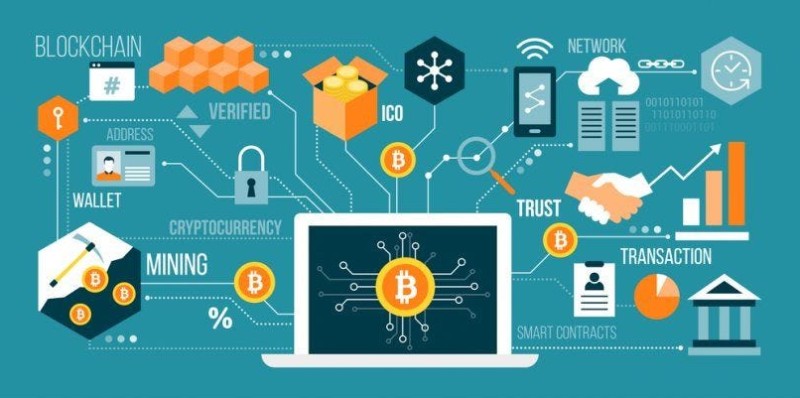
A cryptocurrency is digital money that runs on a network of computers instead of a bank. That's it. The "crypto" part comes from cryptography - the math that keeps things secure. The "currency" part means people use it to store and move value. Unlike dollars or euros, no government issues it. No central authority approves transactions. The network itself does the verifying, and the rules are written in code that anyone can read.
Blockchain is the underlying technology that supports a given cryptocurrency, and the type of cryptocurrency is the unit of value being spent.
The Three Pieces Every Crypto Network Needs
Strip away the hype and every cryptocurrency network has three basic ingredients. First, there's the software - the protocol that defines the rules. Second, there are the participants - people and machines running that software. Third, there's the token - the actual unit of value that moves around. Miss any of these and you don't have a functioning system.
The protocol stitches together existing technologies: encryption, public-key cryptography, distributed ledgers. None of these were invented for Bitcoin. Satoshi Nakamoto (whoever that is) combined them in a new way to solve a specific problem: how to transfer value digitally without a central gatekeeper. The white paper came out in October 2008. The software launched in January 2009. Everything since has been variations on that theme.
Core components of a crypto network
- Protocol software that enforces rules
- Participants who run nodes and validate
- A token that represents value
The Double-Spend Problem and Why It Matters
Here's the core headache. Digital stuff copies effortlessly. I send you a photo - now we both have it. That's fine for photos. Terrible for money. If I could copy a digital dollar and spend it twice, the whole system collapses. Traditional finance solves this with banks. They keep the master ledger. You trust the bank. The bank decides who owns what.
Blockchain networks try to do the same job without the bank. Instead of one ledger in a vault, everyone keeps a copy. When Alice sends Bob a coin, the transaction gets broadcast. Participants check their copies. If the network agrees Alice owns it and hasn't spent it already, the transfer goes through. The ledger updates everywhere at once. No single institution holds the pen.
This is where the blockchain concept starts to click - it's just a shared notebook that nobody owns but everyone can verify.
The basic problem is similar to sending a digital file. When a photo or document is copied, the recipient receives another version while the original remains with the sender. A copy of $1,000, however, could be spent repeatedly.
Proof of Work: Making It Expensive to Cheat
If anyone can participate, what stops someone from creating a million fake identities and taking over the network? This is called a Sybil attack. Bitcoin's answer: make participation expensive in the real world. You want to validate transactions? Burn electricity. Solve a hard math puzzle. This is proof of work.
Miners collect pending transactions into a block. They race to find a number (called a nonce) that makes the block's hash fall below a target value. The hash function (SHA-256 for Bitcoin) acts like a lottery - you can't predict the output, you just have to keep trying. Finding a valid block takes massive computing power. Verifying it takes almost none. Once found, the miner broadcasts the block. Everyone checks it, adds it to their chain, and the miner gets newly minted bitcoin as a reward.
The reward started at 50 bitcoin per block. It halves every 210,000 blocks - roughly every four years. By 2013 it was 25. Eventually it drops below one satoshi (the smallest unit, one hundred-millionth of a bitcoin) and new issuance effectively stops. After that, miners live on transaction fees alone.
How proof of work prevents cheating
- Validation requires real computational resources
- Creating fake identities doesn't help - you still need the hardware
- Miners compete; honest majority wins over time
- Rewards align incentives with network security
Blocks, Chains, and Forks
Blocks don't float in space. Each new block points to the previous one by including its hash. This creates a chain - change one block and every subsequent hash breaks. The network agrees on the valid chain by following the branch with the most accumulated proof of work. Historically called "the longest chain."
Sometimes two miners find valid blocks at nearly the same time. The network temporarily splits - some nodes see block A first, others see block B. This is a fork. It resolves naturally when the next block gets added to one branch, making it longer. Miners on the shorter branch switch over. Transactions in the abandoned block go back to the pending pool.
A transaction isn't "final" instantly. In Bitcoin's original design, six confirmations (the block plus five more on top) meant roughly an hour wait. Merchants could accept sooner with less certainty. This delay was identified early as a drawback for small in-person payments.
Wallets, Addresses, and How Transactions Actually Work
No bank issues coins. No vault stores them. Ownership is just a chain of transaction outputs. Your wallet holds private keys that let you authorize spending. To receive, you generate a key pair, hash the public key, and share the resulting address. That's the string of characters you give people when they want to pay you .
A transaction references earlier outputs as inputs, creates new outputs for recipients, and includes a digital signature proving you control the private key. If an input holds 2 bitcoin but you only send 0.5, the rest comes back to you as "change" - a new output to an address you control. Wallet software handles this automatically.
Transaction hashes replace the serial numbers from earlier digital cash attempts. Follow the chain back far enough and you hit either the genesis block (the first 50 bitcoin) or a coinbase transaction (miner rewards). No central authority issues numbers. The math generates them.
The input does not state a separate amount. It spends the referenced earlier output. If that earlier output contained two bitcoin, the new transaction spends the whole output unless multiple inputs and outputs are used.
Modern Wallets: One Seed, Infinite Addresses
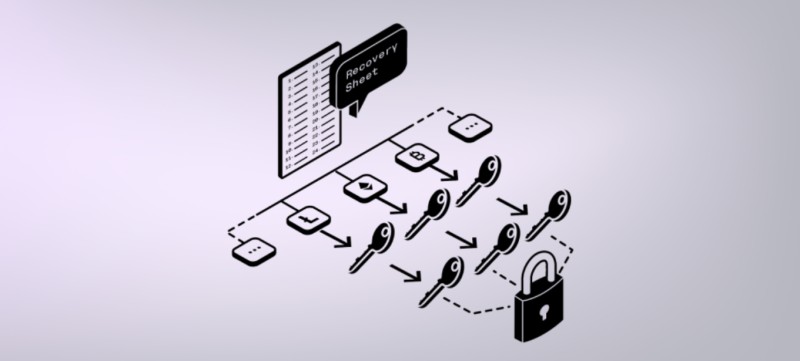
Early wallets generated a new random key pair for every address. Lose the backup? Lose the funds. Hierarchical deterministic (HD) wallets fixed this. One master seed (usually 12 or 24 words) generates an entire tree of key pairs. BIP32 introduced the standard. BIP39 gave us the word lists. BIP44 organized the tree with a standard path structure:
m / purpose' / coin_type' / account' / change / address_index
The apostrophes mean "hardened derivation" - child keys can't reveal parent keys. Purpose 44 is legacy Bitcoin. 49 is SegWit. 84 is native SegWit. 86 is Taproot. Coin type separates different cryptocurrencies so keys don't leak across chains. Account lets you have multiple "accounts" for the same coin. Change distinguishes receiving addresses (0) from change addresses (1). Index just counts up.
This is why modern wallet setup feels so much simpler - one seed phrase backs up everything.
Two Ways to Track Balances: UTXO vs Account Model
Bitcoin and its forks (Litecoin, Dogecoin, Zcash, etc.) use the UTXO model. Every unspent output is a discrete chunk. You spend whole outputs, create new ones, get change back. Fresh addresses for each transaction improve privacy - harder to link your full history.
Ethereum, Solana, Cosmos, and others use the account model. One address per account. Balance goes up and down. Simpler to understand, but every transaction is permanently linked to that address. The derivation path usually ends in /0/0 because there's no change address concept.
UTXO model characteristics
- Discrete unspent outputs
- Fresh address per transaction for privacy
- Change returned to new address
- Used by Bitcoin, Litecoin, Dogecoin, Zcash
Account model characteristics
- Single address per account
- Balance updates in place
- Full history visible on one address
- Used by Ethereum, Solana, Cosmos, Polkadot
How Do You Actually Create a Cryptocurrency
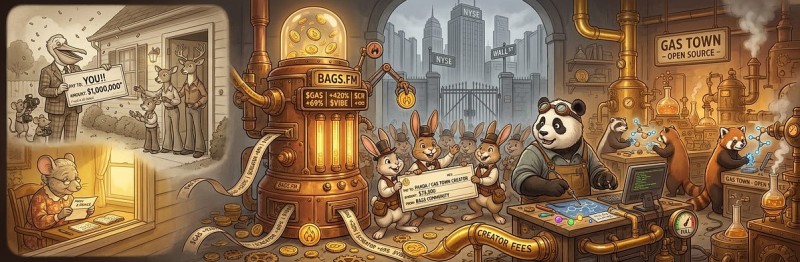
There isn't one way. There are layers. The easiest: issue a token on an existing platform. You define what it represents - a membership, a collectible, a share of future revenue - and the platform handles the blockchain mechanics. Projects like BAGS let creators launch tokens tied to their output. The token trades on an open market. Royalties from trading fees go back to the creator.
Next level: fork an existing codebase. Copy Bitcoin or Ethereum, change the rules - block time, supply schedule, validation method - and launch your own chain. By January 2014 there were over 140 Bitcoin forks. Some were genuine technical experiments. Others were pump-and-dump schemes. The code is open source. Anyone can copy it.
Hardest path: build from scratch. Design your own consensus, your own ledger structure, your own networking layer, your own token economics. This is what Ethereum did (originally proof of work, now proof of stake). What Solana did. What the countless "layer 1" projects attempt. Most fail. The graveyard is large.
If you're asking where to even start , the answer depends on what you're trying to achieve. A community token for a creator? Platform issuance. A new payment rail? Maybe a fork. A novel consensus mechanism? Ground up.
Creating a new digital asset can involve several different layers. A creator can tokenize a product, service, membership, collectible, or other creative work on an existing platform.
The Three Functions of Money and Where Crypto Stands
Economists say money does three things: unit of account (pricing things), medium of exchange (buying things), store of value (saving things). A currency can be strong in one and weak in others. Gold nailed store of value for centuries but sucked at exchange - try buying coffee with a shaved gold bar. Fiat nails exchange and unit of account but relies on trust in the issuer.
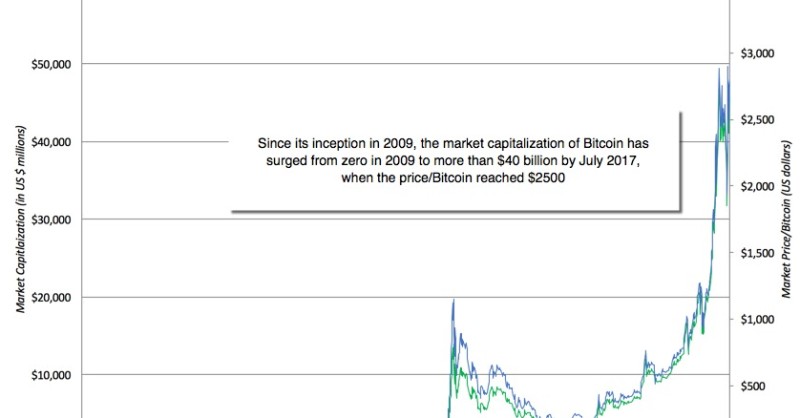
Cryptocurrencies are fungible, divisible, countable - great unit of account potential. But as of the 2017 analysis, relatively few merchants accepted them directly. Most "Bitcoin accepted" merchants instantly converted to dollars. Three barriers: inertia (people used to dollars), volatility (prices swing wildly), and competition (too many coins, none dominant).
The design focus had skewed toward traders, not transactors. Volatility attracts speculators. Speculators don't make good everyday currency. For crypto to function as money, the emphasis needs to shift toward transaction utility.

Proof of Stake and Alternative Consensus
Proof of work isn't the only way. Proof of stake (Peercoin pioneered this, Ethereum switched later) replaces computational work with economic stake. Validators lock up tokens as collateral. Misbehave and you lose your stake. Less energy, different security model. The debate continues - some argue proof of stake leads to centralization (rich get richer), others say proof of work already centralized around mining pools.
Then there's Ripple's approach: a trust-based credit network. No mining. Participants extend credit to those they trust. Obligations net out across the network. It's closer to how traditional banking works, but decentralized. Other projects like Freicoin experimented with demurrage - money that loses value over time to discourage hoarding. Solarcoin tied issuance to verified solar generation. The design space is wide open.
Different consensus mechanisms change everything - security, decentralization, energy use, who gets new tokens.
Transaction Tracing: The Public Ledger Is an Open Book
Every transaction on a public blockchain is visible forever. Addresses are pseudonymous - alphanumeric strings, not names. But patterns emerge. Reused addresses. Common counterparties. Timing analysis. Change address clustering. Exchange deposits. With enough data, analysts can label wallets: exchange, darknet market, ransomware operator, sanctioned entity.
Tracing investigations follow five stages: establish an anchor (known bad address), trace fund flows (peel chains, mixers, bridges), enrich with attribution labels, assess risk indicators, document findings. Law enforcement uses this for ransomware, scams, sanctions evasion, terror financing. The Colonial Pipeline ransom recovery demonstrated it works - the FBI traced the bitcoin, obtained the private key, seized the funds.
A public blockchain records transfers in an immutable chronological ledger. The challenge is not whether transactions can be seen, but what their addresses, amounts, timing, and relationships mean.
Creator Tokens: When Communities Become Economies
Creators have always monetized: ads, sponsorships, merch, subscriptions. Crypto adds a new primitive - a token that represents early support, community membership, or future upside. Think of it like a concert tee that proves you were there before they got famous, except the tee trades on a liquid market from day one.
Unisocks tested this. Digital tokens redeemable for physical socks. Launched at $14, traded at $160. 70% of volume was speculation - people never redeemed. Foundation and similar platforms let creators tokenize work. The token aligns the community with the creator's success. Small creators benefit more - they need the distribution mechanism. Big creators already have distribution.
Tokens can gate access, weight votes, unlock perks. A creator might issue tokens redeemable for an hour of their time. Or auction personal tokens to fund their rise - like a venture round from fans instead of VCs. The legal and trust requirements vary wildly. A collectible badge is low stakes. Tokenizing future income needs audits and enforceable contracts.
Start with something tangible - a badge, a sticker, a digital collectible - before building a full economy.Risks You Can't Ignore
This space is speculative. Extreme volatility. No deposit insurance. No central bank backstop. Exchanges fail, get hacked, freeze withdrawals. Transactions are irreversible - fat-finger an address and the money's gone. Lose your seed phrase? The funds are burned forever. Smart contracts have bugs. Bridges get exploited. Regulators change rules overnight.
Key management is entirely on you. A hardware wallet helps. A paper backup in a safe helps. But there's no "forgot password" button. The network doesn't care about your tragedy. This freedom cuts both ways.
Major risk categories
- Counterparty risk - exchanges, custodians, bridges
- Key loss - no recovery without the seed phrase
- Irreversible transactions - no chargebacks
- Smart contract bugs - code is law, including the flaws
- Regulatory shifts - rules change fast and unpredictably
- Protocol governance - who controls the code matters
Getting Started Without Getting Wrecked
If you're dipping a toe in , start small. Learn how a wallet works. Send a tiny amount between your own addresses. Watch a block explorer. Read the white paper of whatever coin interests you. Understand the difference between holding on an exchange and holding your own keys. The phrase "not your keys, not your coins" exists for a reason.
Don't invest money you can't lose. Don't chase pumps. Don't trust influencers shilling tokens they were paid to promote. The 2014 critique called it a "Wild West" - jokecoins, scams, and genuine innovation all mixed together. That hasn't changed much. Standards are emerging. Professionalization is happening. But the burden of due diligence is still on you.
The tech is genuinely interesting - distributed consensus, programmable money, new coordination mechanisms. But the financial layer on top is a casino. Keep the two separate in your head.
Where This Goes From Here
Nobody knows. The 2017 boom looked like a bubble. Then it happened again in 2021. Then again. Each cycle builds more infrastructure, more developers, more real use cases. Stablecoins became a major payment rail. DeFi invented new financial primitives. NFTs brought digital ownership to mainstream attention. Layer 2s scaled transaction throughput. The base layer keeps humming.
Maybe a cryptocurrency becomes a global reserve asset. Maybe it stays a niche financial tool. Maybe something entirely new replaces the current crop. The code is open. The experiments continue. The only certainty is that the genie isn't going back in the bottle - distributed ledgers are here to stay.
The answer keeps evolving . And that's the point.
Comments on “Create Your Own Cryptocurrency: How Tokens, Wallets, and Blocks Fit Together”
No comments yet. Be the first to share your thoughts.