
- No legal frame for crypto, everyone lost in the dark
- Big hacks like Mt. Gox wiped out user funds
- Low adoption meant thin books and bad prices
- Naysayers called it a futile plaything
How The Largest Crypto Exchanges Evolved: What Their Messy Story Means For You
23 September, 2026
0 comments

How The Largest Crypto Exchanges Evolved
I keep thinking about how weird the story of the largest crypto exchanges really is. Ten years back, this whole thing was just an idea some folks messed with. Now it's a multi-trillion-dollar market. The big exchanges sit in the middle of all that money moving around. They let people buy, sell, and trade coins. And yeah, they got big. Real big.
The source I read said the top three exchanges alone are worth over $21 billion. That's a lot of zeros. Over 600 exchanges exist now. What started as simple trade spots turned into complex money systems. They process billions in trades every single day. I find that kind of wild for something that began with a few nerds and a server.

When you want to trade, you usually go to some exchanges to buy cryptocurrency that feel safe enough. The growth wasn't clean. It was messy, with wins and spectacularly messy failures. That's the part I care about. Not the boring stats, but the human mess behind the screens.
Early Beginnings And Pioneering Platforms
The first crypto exchange was BitcoinMarket.com, launched in March 2010 by Jered Kenna. It let people trade Bitcoin for regular money. Then in 2010, Jed McCaleb launched Mt. Gox. That one became the most popular spot fast. Over 70% of all Bitcoin trades worldwide went through it at the peak. Can you imagine one site holding that much?
Coinbase showed up in 2012. Brian Armstrong and Fred Ehrsam built it. Armstrong came from Airbnb, Ehrsam from Goldman Sachs. They wanted a simple place for normal people to buy coins. Kraken started in 2011 by Jesse Powell. He cared about security and following rules when almost no one did. These early builders had guts, cause the odds looked bad.
Armstrong said it plain: "We started out with a 'no.' This is not going to change. We had the burden of proving to them this was a good decision to make."
If you're in the US and want a start, folks often ask about the best cryptocurrency exchange in usa for a calm first step. Coinbase usually gets named because it tries to follow the law and keep things plain. But early on, even they heard "this is a crypto plaything, doomed to fail."
Obstacles: Regulation, Hacks, And Liquidity
The early days were rough. No clear laws. Hackers hit left and right. Low money flow meant thin order books and weird prices. Mt. Gox got hacked in 2014 and lost 850,000 Bitcoins. That was about $460 million then. The exchange died after that. A whole lot of trust died with it.
Liquidity was the silent killer. Platforms had few users, so spreads were wide and slips happened. Making money from fees was hard. They had to spend on law, security, and tech just to stay open. It wasn't until crypto got mainstream eyes that many exchanges found enough trade flow to breathe.
Early exchange pain points
When people in Europe or elsewhere look for a crypto exchange marketplace they can trust, they often check rule status first. That habit came from these messy years. I don't blame them.
Overcoming Challenges Through Security And Compliance
After the losses, new exchanges put real money into security. They used multi-sign wallets, cold storage, and better encryption. The European Commission pushed to fold crypto exchanges into anti-money rules. So exchanges worked with regulators. They added AML and KYC checks. Not fun, but needed.
Competition got hot. Binance and FTX showed up with new features and loud marketing. Coinbase kept its "rules first" path. Binance, from Changpeng Zhao, went for advanced traders with many pairs. Trust came from clear talk, strong security, and user help. That rift still shapes the field.
Building trust with users was paramount, achieved by implementing strong security measures, transparent communication, a user community, and user resources programs.
Some users just want a what is the best trading platform for cryptocurrency for daily use, not a lecture. The answer depends on if you trade a lot or just hold. The largest crypto exchanges split on that need.
Innovation And Strategies For Success
As the market grew, big exchanges went global. Coinbase opened in over 100 countries. Binance used regional hubs to fit local laws. Three things helped them win: innovation, community, and partnerships. Kraken added futures and OTC. FTX tried new derivatives. Gemini chased approved custodial tools.
Community built loyalty. Exchanges used social media, schools, and events. Partnerships mattered too. Coinbase bought Earn.com and Bison Trails. Zypto formed links across EU, USA, Canada, Asia, Middle East, and Africa. Women led two of the world's largest crypto exchanges, which few folks know.
Keys to exchange growth
- Innovation with new trade types and tools
- Community through social and learning
- Partnerships and smart buys
- Local fit for each region's rules
If you scroll app stores, you'll see a top 10 cryptocurrency trading app list that changes by region. The largest crypto exchanges battle there for your tap. It's a quiet war for screen space.
Women Leading Major Exchanges
Gracy Chen runs Bitget. She facilitates $4 billion in daily trade volume. Raised by a single mom, she studied math in Singapore, hosted finance TV, and read the Bitcoin paper at $300. She joined Bitget in 2022 and now leads over 1,500 staff. Her path is not the usual bro story.
Yi He co-founded Binance. Born in 1986 in Sichuan, she did psych in Beijing, hosted travel TV, met OKX folks, then launched Binance with CZ in 2017. Today Binance is the world's largest crypto exchange with $36.5 billion daily volume and $134.6 billion in assets. She and Richard Teng run it now.
Chen said: "I began by reading the Bitcoin white paper and was instantly hooked. As a mathematician, I loved the mathematical beauty of it."
When folks ask best places to buy crypto in usa they rarely hear about these two women. But their platforms move more coin than most. That's a fact worth saying loud.
Profiles Of The Largest Crypto Exchanges
Binance is the giant. $36.5B daily volume, $134.6B assets. Started June 2017 by Zhao and He. It fits advanced traders and launched an NFT market. Coinbase began 2012, follows rules, easy for new users, runs in 100+ countries. Kraken started 2011, security first, filed secret IPO papers with the SEC.
Upbit is South Korea's top exchange via Dunamu, with about 70% local share. OKX came from Okcoin roots. Bybit and Bitget round out the big names. Nobitex is Iran's largest, with a 2025 hack under sanctions as a noted event. Each has its own mess and win.
Big exchange snapshots
- Binance: largest, wide pairs, NFT market
- Coinbase: rule-friendly, global reach
- Kraken: security focus, IPO filed
- Upbit: Korea leader, building GIWA Chain
- Bitget: led by Chen, $4B volume
People compare the crypto exchange lists to see which fits. I do too. The largest crypto exchanges aren't just big, they're different in mood and rule weight.
How Crypto Exchanges Generate Revenue
A crypto exchange makes money by taking a cut of every trade. Say 0.10% on a $10,000 trade. Both sides pay, so exchange gets $20. Fees change by tier and by if you hold the token. Maker trades (limit orders) cost less than taker (market) trades. Liquidity is the game.
Coinbase fee example: $0–10K tier costs taker 60bps, maker 40bps. At $400M+ it drops to taker 5bps, maker 0. Big traders save a lot. Some exchanges like Bitmex pay makers negative fees to pull orders in. The top pairs with USD make most of the cash.
How the cut works
- Percent taken per trade side
- Tiers lower cost for big volume
- Maker orders cheaper than taker
- Top USD pairs bring most revenue
If you use binance money transfer or similar, the fee hides in the slip. Knowing the cut helps you pick where to trade. The largest crypto exchanges live on this spread.
How Top Exchanges Navigated Ethereum The Merge
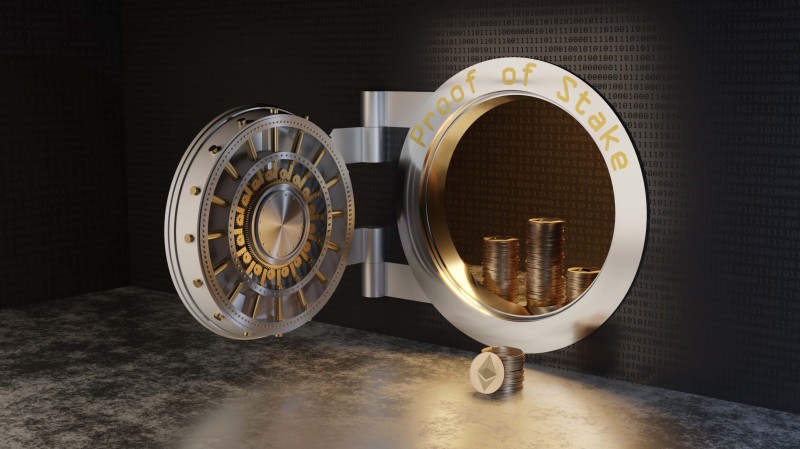
The Merge moved Ethereum from proof-of-work to proof-of-stake. Leading exchanges paused deposits and withdrawals of ERC-20 tokens until done. Binance paused one hour before. Coinbase paused a few hours before. FTX kept trading live. OKX paused transfers but not trade. Bybit tracked the new price.
Kraken adapted as a known player. Upbit wasn't in the source profile for Merge but built later tech. The point is the largest crypto exchanges had to act fast and tell users clear. A chain split could mean forked tokens. They planned for that.
For daily US folks, a common question is can i buy crypto on webull and how that compares to big names. The largest crypto exchanges still hold the deep books Webull may not match.
Kraken's Confidential IPO Filing
Kraken co-CEO Arjun Sethi said the exchange filed secret papers for a US IPO. They sent a draft Form S-1 to the SEC. Value dropped to about $13.3 billion from $20 billion. Deutsche Börse put $200 million in for 1.5%, implying that lower number. They froze plans during a cold crypto winter, then bitcoin rose.
This matters cause Kraken is one of the largest crypto exchanges and a rule-first shop. The kraken exchange crypto path shows old guard going public may be near. If it lists, that's a big shift for the field.
Sethi said Kraken strives to make advanced trading strategies typically reserved for professional investors available to individual investors.
Upbit's Move Into Blockchain Infrastructure
Upbit, run by Dunamu, is building GIWA Chain. It's an Ethereum Layer-2 using OP Stack. The testnet is live, mainnet planned. Upbit runs the main sequencer. Optimism gives backup and support. Coinbase used OP Stack for Base, Kraken for Ink. Upbit holds about 70% of Korea's market.
Dunamu was valued near $10.2 billion. CoinGecko shows Upbit at 6.7% of top CEX spot volume in 2024, then 5.5% in 2025 with volume down 18.9% year over year. The largest crypto exchanges now build chains, not just match trades. That's a new turn.
European Crypto Adoption And Exchange Dynamics
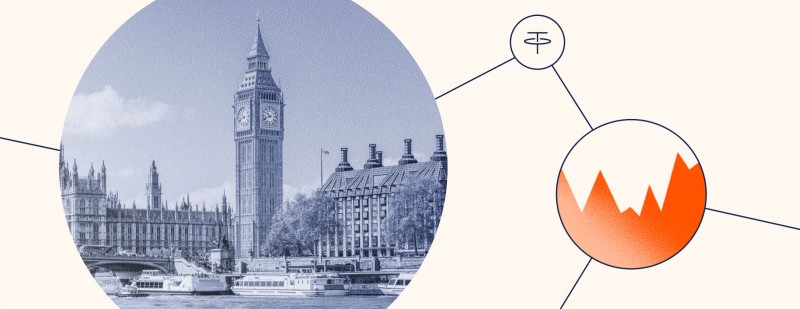
Between mid-2023 and mid-2025, Europe's volume dipped then peaked at $234 billion in December. Russia led with $376.3 billion received, UK $273.2B, Germany $219.4B, Ukraine $206.3B, France $180.1B. Big markets kept growing, which breaks the "big grows slow" idea.
MiCA changed the game. It's a single rule set across the EEA. Firms get temp pass without full license until 2026 in some spots. Traditional banks now offer custody and trade. EUR stablecoins grew fast. Circle's EURC jumped 2,727% in a year. USDT got shut out by rule limits.
Europe exchange notes
- Russia top volume, UK second
- MiCA unifies rules across EEA
- EURC stablecoin growth outpaces USDC
- UK retail flows to DEX exceed CEX since 2023
The largest crypto exchanges watch Europe close. Rules there shape what they can offer. A calm policy helps liquidity stay. A bad one pushes users to DeFi.
DeFi Activity And The Largest Crypto Exchanges
DeFi bridged 65% more in EEA vs non-EEA in early months. That links to stablecoin shifts and cross-chain ops on Binance Smart Chain and Polygon. UK retail to DEX beat retail to CEX since August 2023 due to rule hits on central spots. Institutes in UK still prefer CEX.
Russia's DeFi surged to 8x early baseline then sat near 3.5x. A ruble stablecoin helps cross-border pay. The largest crypto exchanges feel this. They add chains and tools to keep users who might drift to DeFi.
Looking ahead, European crypto landscape shaped by MiCA, institutional engagement, DeFi adoption, network effects driving continued expansion even in mature markets.
If you want a top 10 cryptocurrency trading app that links to DeFi, check which large names added wallet and swap. The line between exchange and chain blurs more each year.
What The Messy Story Means For You
The largest crypto exchanges grew from a joke to a global force. They won by building trust after hacks, fitting local law, and adding tools. They fail when security breaks or rules bite. Your job is pick a spot that fits your need and watch its mood.
I like that normal people can now trade coins without a finance degree. The jargon is the enemy, so I skipped it. The story is human: perseverance, weird twists, and a few folks who just didn't quit. That's why the largest crypto exchanges matter.

When you pick exchanges to buy cryptocurrency think of the early mess. The biggest names today stood through it. Others vanished. That split is the real lesson.

Comments on “How The Largest Crypto Exchanges Evolved: What Their Messy Story Means For You”
No comments yet. Be the first to share your thoughts.