
- Block number - where it sits in the line
- Data field - the actual transaction info
- Nonce - random number to find a valid hash
- Previous hash - link to the block before it
This Is What Blockchain Is In Simple Words (Without The Headache)
19 September, 2026
0 comments

What Is Blockchain In Simple Words
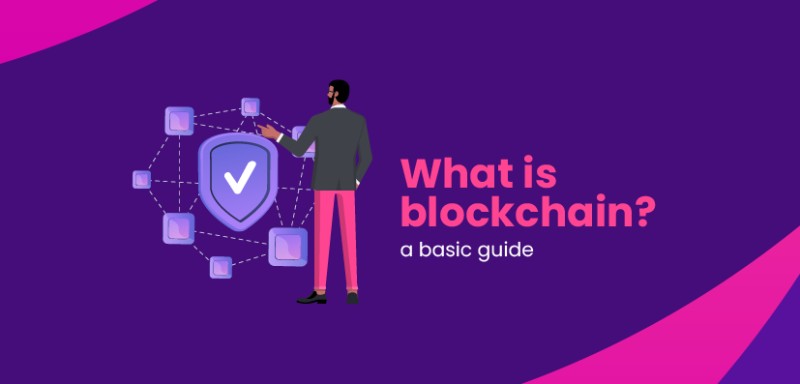
Someone mentions blockchain at a party. You nod like you know. They ask what it is. Here's what blockchain is in simple words: a shared transaction notebook copied on many computers. No single boss can quietly tweak it. That's the whole vibe in one breath.
I used to fake my way through these talks. Then I read a bunch of plain stuff and it clicked. What is blockchain in simple words is not nerdy nonsense. It's a permanent list of transactions kept on many computers, so no one person runs the show. Handy for money or those smart contracts.
Why People Call It A Notebook And A Chain
The word blockchain comes from two small words. Block and chain. Each block is a piece of data, a record that needs to be processed with cryptography. A block holds transaction data, a time mark, and the last block's hash. The chain is the network of computers that process these blocks.
Records are not stored on one central server. They get sent through a peer-to-peer network. Every machine that helps compute the blocks is part of a distributed ledger that copies the trades between blocks in real time. That's why people say it's a shared notebook. Everyone gets a copy.
A Public Cloud You Can't Erase
One easy way I heard it: imagine a public cloud. Like an iPhone's iCloud but public, where anyone with internet can upload files (pics, videos, docs, even money) and see what others put up. This makes the blockchain democratic and inclusive.
This huge database is controlled by everyone who uploads. No single person or entity owns the data. You need 51 percent of the network to agree to do anything. Hundreds of thousands of people commit every day to keeping it safe and they download the whole database so they have it offline too.
Once you upload something on it, you can no longer change it or take it down - it's there forever and ever.
That forever part is why folks trust it. The cloud stays an unbreakable source of truth. It's immutable and transparent, therefore extremely trustworthy. If you're just starting out and want a calm first step, learning crypto for dummies is a good way to ease in without the headache.
The Ledger And The Treasure Chests
Another plain explanation uses a ledger and treasure chests. If Jane wants to buy from Sarah, she opens her chest with a private key, takes out a coin, and sends it to Sarah's chest. That simple trade is recorded in the ledger as a permanent record.
At its basic level, blockchain is a way to move money or coins through a system with no identifying info about the users. The coin goes from one chest to another. What isn't known is if the chest belongs to Sarah or Jane. Transfers only happen if a private key authorizes them.
Everyone reads from the same ledger, so blockchain cannot be censored or tampered unless you track back through every single trade the coin made. It's estimated around 5.6 million people have access to blockchain. Even if one person tried to alter a record, they could never make sure everyone else's ledgers agreed.
What Is A Block Made Of
Let's get into the parts without the fog. blockchain what is a block is a fair question and the answer is simple. A block is composed of a block number, a data field, and a nonce which is a random number used to make the block give a valid hash.
A valid block's hash has a certain number of leading zeros. If any change is made to the data, a completely different hash is made and it becomes invalid. Every block in a blockchain is tied to the previous block's hash. Change data in any block and it invalidates every block in front of it, like a domino effect.
Parts of a block
Distributed Ledger Technology
Distributed ledger technology is based on a large amount of digital data copied, synced, and shared between members spread across many locations. It's decentralized, meaning it doesn't store data on one server and has no one admin that controls it.
This matters because a normal database has a boss. Blockchain doesn't. The copies live on thousands of machines. If you want to dig deeper on the moving parts, how do crypto currencies work is the next thing to read after you get the ledger idea.
Peer-To-Peer Network And Miners
To make the distributed ledger work, a network of computers shares all tasks needed to process blockchain transactions. Peers make their computing power available to other members. No admin is required and trades get processed quick.
Each person who joins can download a copy of the blockchain and start processing. Then they become part of the network. Peers in a blockchain network are called miners. They confirm transactions and the more miners there are, the safer the network is.
All of this is done by solving cryptography maths problems.
Cryptography Keeps It Shut
The whole sense of blockchain tech is based on cryptography. Every part of a transaction processed in blocks is secure and unseen by third parties. That's how cryptocurrency works - amounts move between sender and receiver, no one knows who they are.
There's no middleman like a bank. Just the network of peers that let the trade finish. Thanks to encryption, the op cannot be edited, no fees are charged, and the exchange is instant. Each party uses a digital signature to prove identity and authenticate. For the basics of that, how crypto works is a phrase worth googling once you care.
Consensus And The 51 Percent Rule
The majority of the network must agree before any new change is entered. All blocks need the same components to be allowed in. Then the majority of peers process it and agree no intermediary edited it.
There is a mechanism called proof of work used by many networks. Every computer must solve hard math before it can verify the trade. Then peers get a reward - in Bitcoin that's usually some crypto or tokens. To do anything on the chain you need 51 percent of consensus. Pure democracy, no single entity rules.
A 51 percent attack means that if an invalid transaction can convince 51 percent of a network, then it will be approved and added to a ledger.
That would be incredibly unlikely, but the nature of the internet is that if something is open to exploit, it likely gets tried at some point. Still, the bar is high. This is one of those "hey, don't skip this part" facts if you plan to trust big money to a chain.
Key Properties Of Blockchain
Blockchain has a few pillars that keep it standing. Security comes from the need for majority agreement plus encryption and proof of work. Decentralization means nobody controls it - some people process trades but can't change them.
Scalability lets the chain grow as more people join to verify. Transparency means you see the whole history, just not names. Immutability means once data is cemented, it stays. Distribution gives users a platform they can trust with assets, good for smart contracts.
What makes blockchain tick
- Security - majority must agree, strong encryption used
- Decentralization - no one boss, no single point of control
- Scalability - grows as peers join to verify trades
- Transparency - full history open, names hidden
- Immutability - recorded data cannot be reversed or changed
- Distribution - many identical copies, no single failure spot
How A Transaction Actually Works
Someone requests a transaction. The request goes out to a peer-to-peer network of computers called nodes. The nodes validate the trade and the user's status using known algorithms.
Once verified, the trade is combined with others to create a new block of data for the ledger. The new block is added to the existing blockchain in a permanent way. Then the transaction is complete. It's not magic, just a bunch of computers all checking the same math.
Bitcoin And The First Blockchain
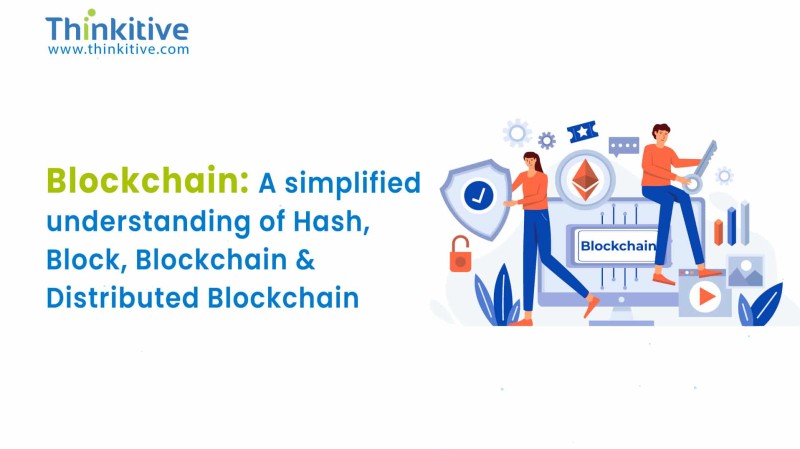
The first blockchain was formed by an anonymous author or authors called Satoshi Nakamoto and was strongly tied to Bitcoin. This let the currency be owned by anyone with a code to a digital wallet. All Bitcoin trades are transparent, meaning everyone can see the chain.
You see what happens but not who, unless their hash ID is known. Bitcoin was the pioneer of blockchain tech, but that doesn't mean its only use is sending crypto money. When people ask what are bitcoins used for the short answer is: store value, pay for stuff, send money with no bank.
Ethereum is also popular. Apps and exchanges let users buy and sell with real money like USD or EUR. Some use coins to speculate like stocks, or pay at shops with a special terminal. Using digital money like Bitcoin or Ethereum is not that weird anymore.
Smart Contracts
A blockchain can hold more than trades. Code can stand for a contract. Two parties write the deal as code and put it in the chain. The people can be anonymous but the contract is in the public ledger.
Certain events trigger the code, like a date or a price, and the contract runs on its own. No "I misunderstood" excuses. This system runs without lawyers or notaries. For business, it can automate legal and financial steps in a safe, clear way.
A smart contract is essentially a computer program that executes automatically when certain pre-set conditions are met.
Simple case: rent a vacation home through a smart contract. Pay before the 1st and digital keys go to your email. No pay, no keys. No person checks it - all automatic. Cuts errors, cost, and silly fights. If you want to act on this, how to get started on crypto usually begins with a small wallet and a test contract.

Non-Fungible Tokens
A non-fungible token is a one-of-a-kind item in the cyber world. The NFT can be an image, video, song, doc, or game. It uses blockchain to prove its realness, who owns it, and its trade history.
The item is not swap-able with any other asset, even copies. That singular ID comes from the blockchain data. One big use is protection of intellectual property via NFTs. So cryptocurrency what is is not just coins - it's also the base for unique tokens like these.
Public Vs Private Blockchains
Besides public blockchains open to anyone, there are private ones called permissioned blockchains. The ledger is open only to a specific group and is more centralized. Bitcoin uses public. Some coins use private.
Private chains are faster but more prone to hacks. A business doesn't need a private chain. Ethereum is public but allows smart contracts, so it can fit business trades. Picking private can be about hiding ledger trades, depending on the industry.
Real-World Uses Beyond Coins
Blockchain is more than crypto. Finance, energy, health, and government use it for password-less encryption and document checks. Cross border payments become less of a pain than old wire services.
Voting systems can use its security to guard against fraud. Logistics can verify the supply list at each step. Supply chain firms track products with high security. Paying with Bitcoin for food or games carries minimal fees and works in minutes.
Where blockchain shows up
- Finance - cross border payments, less fee, no bank middleman
- Voting - secure ID, less fraud, open count
- Logistics - verify goods and release pay on delivery
- Health - medical history ledger shared with consent
- Fundraising - token sales with smart contract rules
- Humanitarian - cash aid with biometric ID checks
UNHCR noted an entire medical history could be recorded in a blockchain ledger for secure access by authorized hospitals.
Risks And The Long View
Like all new tech, proceed with caution. Many blockchain uses are not fully built or tested. Early adopters take on more risk. The business side selling this tech is still forming, so check things with care.
Low-cost proofs are smart to gain hands-on feel. Large bets should wait given the lack of maturity. The chain is safe by design, but your wallet storage can be weak. If a card number is stolen, that's on the usage, not the chain.
Downsides: it takes a lot of learning, big data can scare non-tech folks, and bank transfers are still easier for many. Private chains get hacked easier. Public chains are safe but not yet full rivals to old systems. If you follow latest blockchain news keep in mind most of it is early, not settled.
How I'd Start If I Were You
If this stuff is new, don't dump life savings in. Read the plain stuff, open a small wallet, send a tiny amount to yourself. Watch how the ledger records it and how the hash links blocks.
When you feel ready to move, how to get started with crypto currency is less about chasing coins and more about understanding the ledger first. And if someone says unchained crypto they just mean assets free from bank control on a chain like this.
Doug Greene at UNHCR said while there is tremendous hype, it is important to understand and harness the technology.


Comments on “This Is What Blockchain Is In Simple Words (Without The Headache)”
No comments yet. Be the first to share your thoughts.