
How Do Crypto Currencies Work? A Plain English Tour Of Blockchain And Stablecoins (No Yawns)

How Do Crypto Currencies Work? A No-Jargon Plain English Tour
Coffee in hand, wondering how do crypto currencies work? Good. Me too. Here is the bare-bones intro to blockchain and stablecoins that won't require a CS degree. I always figured money was just paper and coins till I read the manual. Turns out the story is way older and way weirder.
Our ancestors started with barter. You give me two buffaloes, I give you five sharp axes. That got silly fast. Not everyone wants a buffalo, and you can't chop one in half easy. So people moved to shells, salt, gold, silver. Then paper money showed up, backed by gold at first. These days a 100-rupee note is just a promise from a bank, not a chunk of metal. Money, at its core, has to do four jobs: a medium to trade, a measure of worth, a standard for later pay, and a store of value.

Then computers came. Debit cards, net banking, mobile wallets, the whole zoo. And in October 2008, a person named Satoshi Nakamoto dropped a paper called "Bitcoin: A Peer-to-Peer Electronic Cash System." That was the first true peer-to-peer money with no bank in the middle. Bitcoin got a bad name early on because folks on the Silk Road used it for drugs and guns. But the tech underneath was the real shift. If you're just learning crypto for dummies , that paper is ground zero.
What Is Cryptocurrency?
Cryptocurrency is a digital money that uses cryptography for safety. Think of cryptography like a unique lock and key for your coins, so only you can spend them. These coins run on a decentralized network. No government, no single boss, no one in charge. They live on blockchain tech, which lets people send value peer-to-peer without middlemen.
Some crypto, like bitcoin, has a hard cap. Only 21 million will ever exist. That makes it deflationary, weird for a currency. A cryptoasset is just a digital stand-in for value or rights, using blockchain, traded peer-to-peer, not ruled by a central body. Virtual currency is a digital value used as exchange or store, but no legal tender anywhere. Fiat is the coin and paper of a country. E-money is digital fiat. Crypto is its own beast.
The word cryptocurrency became part of the American lexicon when Webster's Dictionary added it in 2018. And per CryptoLiteracy.org, most Americans still don't get the basics. Over 560 million people use crypto worldwide, but the know-how lags. If you want how to get started with crypto currency , know first what the coin actually is before you buy a cent.
How Crypto Works: Blockchain Technology
Crypto works via blockchain tech. The blockchain is a decentralized ledger across many computers that records trades. Once written, a trade can't be reversed and anyone can view it. Each trade is grouped in a block, checked, and added to a chain of past blocks. This gives security and clear view for all parties.
A blockchain is a shared unchangeable record of asset exchange. It is fast, updates at once, and hard to fake because copies are everywhere. No one holds the single key. Fans say it is secure. What is clear is the crypto it carries can swing wild in price. To stop double-spend, Bitcoin uses the chain as a public time-stamped ledger. The blockchain what is a block question is simple: a block is a batch of new trades, hashed and chained to the last one.
Inside a block, trades are hashed in pairs up a tree to one root hash. That root sits in the block header. Each block also stores the prior block header hash. Change one old trade and you must rewrite that block and every block after. That is the glue. Bitcoin uses proof-of-work: a miner must hash a block header below a target. Miners spend power and get new coins plus fees.
Bitcoin solves the double-spending problem through the blockchain - a public ledger containing an ordered and time-stamped record of transactions.
A bitcoin divides to 8 decimal places. The smallest bit is a satoshi, 0.00000001. The last bitcoin block comes around block 6,929,999, near the year 2140 by the protocol math. After that, the count stays just under 21 million. Most money today already is just a history of trades and balances, not paper you touch. Crypto just makes that plain.
Proof-of-Work and Proof-of-Stake
Some coins like bitcoin and litecoin are made by mining. Computers solve hard math, add a block, get new coin. That is proof-of-work. A bitcoin miner is not a guy with a pickax. He runs chips to hash. Reward started at 50 BTC per block and halves every 210,000 blocks. Miners often join pools.
Other coins like ethereum use proof-of-stake. Select validators confirm trades based on how much coin they lock as collateral. No giant power bill. Both ways keep the chain honest without a bank. The bitcoin protocol aims for 2016 blocks every two weeks; if faster or slower, the hard target shifts.
Cryptography and Security Foundations
Cryptography is the science of hiding and showing messages. Encryption turns plain text to cipher. Decryption reverses it. A kid named Sanya and her friends used a code: "read the book" meant "sneak out." Julius Caesar shifted letters by 3. That is symmetric crypto, same key both ways. Problem: if the key leaks, the secret is out.
Modern systems use asymmetric keys. Public key encrypts, private key decrypts. Only the private key owner opens the mail. RSA is one method: pick two big primes, build keys, encrypt with public, decrypt with private. Safety rests on how hard it is to factor the big number n. A one-way hash takes any input to a fixed string; change one bit, get a new string. Used in proofs and signatures.
Digital signatures let you sign a message hash with your private key. The reader checks with your public key. Blind signatures hide the content while signing, useful for digital cash ideas. But signatures alone don't stop double-spend; the blockchain does. For cryptocurrency what is safety, it is keys plus chain plus signatures together.
Wallets, Addresses, and Key Management
A Bitcoin address is 26 to 35 letters and numbers, starting with 1 or 3. It is where coins can go. A wallet at its core is a set of private keys, in a file or on paper. The wallet does not store coins. It holds the key pairs that control them. You can grab a free bit coin wallet from open source tools, but guard the seed like cash.
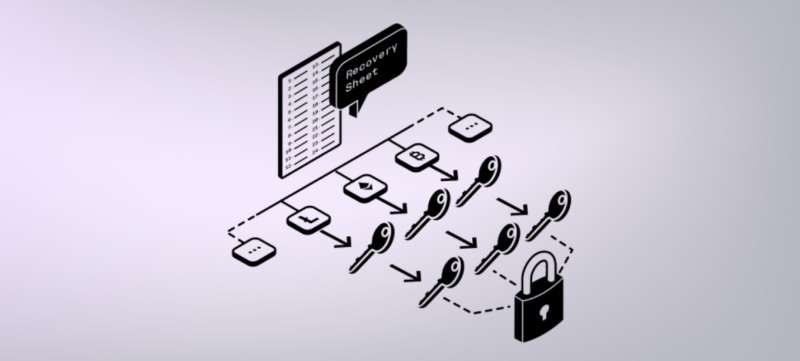
HD wallets came around 2013 as BIP32. One master key grows a tree of child keys. BIP39 turns the master key into 12 or 24 words, your seed. BIP44 sets a path like m / purpose' / coin_type' / account' / change / address_index. UTXO coins use fresh addresses per receive, with change sent back to a new address. Account coins like ethereum use one address, no change address.
Key facts for wallet use
- Seed words recover all keys; never type them online.
- UTXO model gives new address each time for privacy.
- xpub leak lets others watch your trades; don't share it.
- Use known platforms; scams mimic fiat scams.
Although called wallet, does not store bitcoins; it's collection of public-private key-pairs.
Types of Cryptocurrencies
Bitcoin started in 2009, the first and "digital gold." Ethereum runs smart contracts and apps. Litecoin is faster with lower fees. Dogecoin is a meme coin with a big fan base. Stellar helps cheap cross-border pay. Polygon pays fees and governance on its network. USDC is a stablecoin tied to USD. Over 140 forks of Bitcoin code now exist, new ones each week.
These crypto currency coins span jokes, copies, and real tools. Some try new encryption or distribution. Peercoin uses proof-of-stake. Freicoin adds demurrage. Ripple aims at credit networks. The point: the base tech is a template, and the uses branch out. No one coin rules all.
Stablecoins: Definition and Types
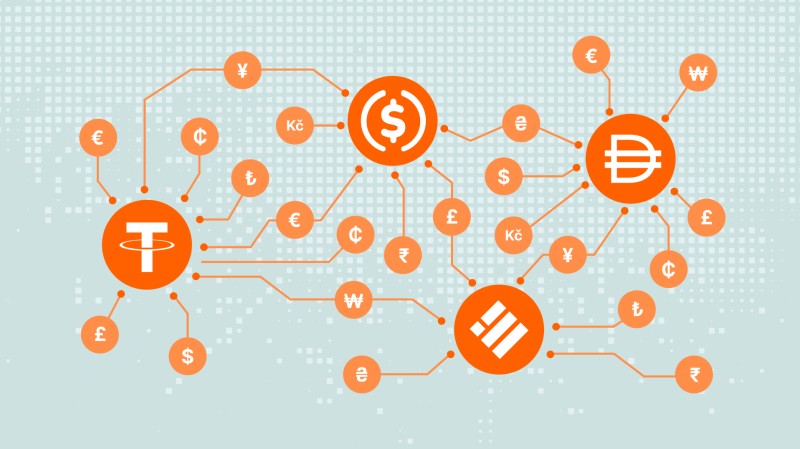
Stablecoins keep a steady value by pegging to less volatile assets. Unlike most crypto, they don't swing wild. They often tie 1:1 to fiat like USD. First seen in 2014, they mix blockchain speed with price calm. Regions with shaky money use them as a hedge and for cheap remittance.
There are four main types. Fiat-backed pegs to government cash, like USDC at 1 USD. Crypto-backed uses other coins as backup, over-collateralized; DAI is backed by ETH. Commodity-backed ties to gold or oil; PAXG is one ounce of gold per token. Algorithmic uses software to tune supply; TerraUSD collapsed, a warning. For how to get started on crypto , stablecoins are the calm entry before wild coins.
Stablecoin types in short
- Fiat-backed: USDC, USDT, pegged to USD or EUR.
- Crypto-backed: DAI, over-collateralized by ETH.
- Commodity-backed: PAXG, each token one gold ounce.
- Algorithmic: AMPL, FRAX, supply set by code, risky.
Stablecoins in the Market and Regions
Stablecoins grew to over two-thirds of crypto transaction value in recent measures. They overtook BTC for everyday transfers in many places. Latin America and Sub-Saharan Africa use them for remittance and savings. Some areas trade stablecoins as a share of GDP at leading rates worldwide.
Rules vary. The EU has MiCA with licenses and reserve rules. Singapore frames single-currency stablecoins. Hong Kong ran a sandbox. Japan allows fiat-backed under strict reserve. US work includes the GENIUS Act for reserves and audits. Centralized issuers can freeze tokens; decentralized ones resist that.
Using Stablecoins and Crypto in Everyday Life
Crypto debit cards link a processor to your wallet and auto-convert to fiat at checkout. John buys coffee, the firm takes the crypto amount, swaps to dollars, pays the shop in seconds. Check if your area allows it; some ban such cards. The IRS sees crypto as property, so spending may trigger tax on gain.
Stablecoins help people with just a phone hold value without a bank. Cross-border pay goes wallet to wallet. Gig workers get payroll fast. In volatile economies, folks swap local cash to a stablecoin pegged to a stronger asset. The uses are plain and human, not just trading charts.
Stablecoins foster financial inclusion: stored in digital wallets, anyone with mobile phone can hold/transact without bank account.
What Are Bitcoins Used For
Bitcoin was built as peer-to-peer cash, but its scarce supply and price swings made daily use rough. Still, it moves value without banks, with small or no fees, and cheap remittance for some corridors. Some see it as "digital gold," a store more than a coin for coffee. The what are bitcoins used for answer today is mix of store, remittance, and protest against bank control.
Beyond BTC, smart contract coins run apps and DeFi. Meme coins build communities. Stablecoins pay and save. The uses stretch from dark net past to church groups weighing donations. Charities may take crypto to cross borders where banks fail, then swap to regulated cash fast. Caution advised after price plunges.
Limitations and Critiques
Bitcoin has real limits. Mining favors those with cheap power, fees may rise, speed drops as the chain grows. It is deflationary and volatile, bad for the risk-shy. Illicit trade and tax evasion linger unless wallets are ID'd, which then brings surveillance. Massive power use and 51% attack risk are there too.
Some writers note crypto does not let people issue credit to each other, the way community currencies do. They like Ripple's credit network idea more. None of this kills the tech; it just says the tool has edges. Know the edges before you trust it with rent money.
The birth of computers and the Internet brought in many electronic payment systems including debit cards, stored value cards, giro transfers, credit cards, net-banking...
What Is Blockchain In Simple Words
If you still ask What is blockchain in simple words , here is my plain version. It is a shared notebook copied on many computers. When you pay, the line is written and everyone sees it. No eraser works. The notebook links pages so you can't swap an old line without rewriting the whole book. That is the whole trick.
The notebook is not run by a bank. It is run by the network. Miners or validators keep it honest for a reward. You trust the math, not a clerk. This is why blockchain and crypto fit hand in hand, and why the term shows up in latest blockchain news even when the coin price is boring.

One Last Plain Thought
I wrote this with coffee and no CS degree, just the source manual. How do crypto currencies work? They use keys, hashes, and a shared chain to move value without a central boss. Stablecoins add a calm peg for daily use. Wallets hold keys, not coins. That is the tour. The rest is detail, and you now have the map.



Comments on “How Do Crypto Currencies Work? A Plain English Tour Of Blockchain And Stablecoins (No Yawns)”
No comments yet. Be the first to share your thoughts.