
How Vanguard's Shift on Crypto Currency Affects Everyday Investors

Vanguard's Shift on Crypto ETFs
Here's something that made me sit up straight when I read it. Vanguard, the giant asset manager that spent years telling investors to keep their distance from Bitcoin, opened its brokerage platform to spot cryptocurrency ETFs. This isn't some scrappy startup making noise. We're talking about a company that oversees trillions in assets and serves tens of millions of customers. When they change their tune, regular investors take notice.
But here's the twist that still feels a little odd: Vanguard says it has no plans to launch its own crypto products. They're letting customers buy third-party ETFs, but they won't create their own. It's like they're dipping a toe in the water while keeping one foot firmly on the shore.
Vanguard said it had no plans to launch its own cryptocurrency products.
That statement came right around the same time they started allowing access to spot crypto ETFs on their platform. For years, Vanguard had been the holdout. While BlackRock's iShares and Fidelity rolled out Bitcoin funds, Vanguard watched from the sidelines. Their message was clear: crypto is too risky for regular investors.
Their original blog post was blunt about it. They called crypto an immature asset class with little history, no inherent economic value, no cash flow, and warned it could create havoc within a portfolio. That was Vanguard's line in the sand.
Vanguard's Original No-Coin Stance
Vanguard's position was consistent with comments made by their founder Jack Bogle back in 2017, when Bitcoin was trading near $10,000 and fears of a bubble were widespread. Bogle urged the public to avoid Bitcoin "like the plague." He explained his thinking simply:
Bonds have an interest coupon, stocks have earnings and dividends, gold has nothing. There is nothing to support Bitcoin except the hope that you will sell it to someone for more than you paid for it.
Bogle said his position would remain valid even if Bitcoin reached $20,000. The price did reach that level about a month later. A financial columnist at the Los Angeles Times wrote that Vanguard's stance was:
That's a smart and responsible policy that places the interests of Vanguard's clientele ahead of those of the greedy promoters and scamsters infecting the entire cryptocurrency field.
I can see why people felt that way. Vanguard had built its reputation on protecting middle-class investors. They weren't about to let customers chase hype. Their risk-averse philosophy made sense when the crypto market was full of questionable projects and wild price swings.
But attitudes have always been complicated when it comes to crypto. Fortune Crypto editor Jeff John Roberts argued that treating Bitcoin identically to poorly conceived altcoins didn't make sense. He pointed out that the lack of cash flow could also be said of gold, and that Bitcoin's operating history was significant by most standards. He asked whether a small position presented the same danger as putting a large chunk of family wealth into crypto.
That distinction matters. Standard investment theory calls for diversification, which can include small positions in volatile assets. One percent is a very different animal than a majority stake.
Why Vanguard Said No at First
When the first U.S. spot Bitcoin ETFs launched, Vanguard remained outside. BlackRock and Fidelity had already introduced products, while Vanguard continued to cite concerns about cryptocurrency as an immature and potentially disruptive asset class. Their reasoning came down to a few core points:
Vanguard's original concerns about crypto ETFs
- Bitcoin had no cash flow or inherent economic value
- The asset class had too little operating history to trust
- Crypto prices were highly volatile and unpredictable
- The market contained many poorly conceived projects and promoters
These weren't just talking points. Vanguard had watched the crypto market evolve from the early days when Bitcoin was a fringe concept to the 2017 boom and bust cycle. They had seen what happened to retail investors who piled in during the hype. Their caution wasn't about being behind the times - it was about protecting people from losing money.
Jeff John Roberts noted that some of these criticisms also apply to gold. Vanguard's original statement described crypto as a commodity, and gold doesn't produce cash flow either. Roberts pointed out that Bitcoin had accumulated years of operating history by that point, and some saw it as the best-performing asset of recent years. Those observations were offered as counterpoints to Vanguard's original description, not as proof that Bitcoin carried no risk.
The recurring criticisms that Vanguard and others raised were clear:
Bitcoin's ongoing risk factors
- No cash flow or dividends to value the asset
- No readily measurable intrinsic value
- Price depends heavily on future demand and expectations
- High volatility that can dominate a portfolio
- Prevalence of scams and poorly conceived projects
- Regulatory, custody, and security risks remain
The Leadership Change at Vanguard
The leadership at Vanguard changed during this period. Tim Buckley, a long-time veteran who had spent over three decades at the company, stepped down as CEO. News reports suggested he had made the decision himself, believing it was time to hand over the reins. Some speculated that he was leaving because Vanguard had missed the Bitcoin ETF boom.

But others argued the policy was grounded in Vanguard's risk-averse philosophy, not just one person's view. The company's approach to protecting middle-class investors had been consistent for years. Buckley's successor brought a different perspective.
Salim Ranji took over as CEO. His background was different from Buckley's - he had previously worked at BlackRock and had spoken publicly about Bitcoin's potential. His appointment was noted as a possible contributing factor in Vanguard's changed tone toward crypto.
Ranji's experience at BlackRock gave him a different lens. BlackRock's CEO Larry Fink had embraced Bitcoin ETFs and made them a major part of the firm's offerings. When Vanguard's new leadership came in with this perspective, it opened the door to reconsidering policies that had been shaped by a different generation of thinking.
What Changed Vanguard's Mind
Several factors pushed Vanguard toward their platform shift:
Reasons behind Vanguard's policy change
- Institutional demand for digital assets had continued to grow
- Some Vanguard clients wondered why Bitcoin exposure was acceptable for institutions but unavailable through Vanguard
- Digital-asset regulation had been developing in the United States and Europe
- Bitcoin-related ETFs had gained acceptance among large financial firms
- Vanguard's customer base had expressed interest in crypto products
- New leadership was more open to cryptocurrency than the previous leadership
The tension within Vanguard's position was real. Despite their skepticism toward Bitcoin, Vanguard reportedly held significant stock in companies with crypto exposure, largely because they operate funds that track indexes like the Nasdaq-100. This index exposure was not described as a direct endorsement of Bitcoin, but it showed the complexity of their stance.
When asked about a possible change, Vanguard's spokesperson said:
We continuously evaluate our brokerage offer, investor preferences, and the evolving regulatory environment. If and when a decision is made, clients will hear directly from Vanguard.
The eventual platform decision did not resolve every difference between their earlier and later positions. They opened access to third-party spot crypto ETFs while maintaining that they had no intention of creating their own crypto products. The change in access was presented separately from Bitcoin's speculative characteristics and the possibility of a loss reaching zero.
Vanguard cited greater market maturity and evolving investor preferences as reasons for the change. The decision followed a period in which BlackRock's iShares Bitcoin Trust, Fidelity products, and later spot Solana and XRP ETFs demonstrated growing institutional and retail demand. The crypto ETF landscape had matured from wild speculation to something more established.
The Possible Flood of New Retail Buyers
One calculation noted that if only 1% of Vanguard's customer base tried a Bitcoin ETF, approximately 500,000 people could become first-time crypto ETF investors. That's not a prediction - it's a what-if scenario. The size of any later allocation, the products customers selected, and the amount invested were not established.
This represented potential demand rather than completed inflows. But it's easy to see why it matters. Bringing crypto exposure to a broader audience through a trusted platform could accelerate adoption significantly. Vanguard's customer reach was enormous, and their platform had historically been a place where regular investors went to build long-term wealth, not chase quick gains.
If only 1% of Vanguard customers tried a Bitcoin ETF, roughly 500,000 people could become first-time crypto investors.
Someone described Vanguard's decision as a potential catalyst for Bitcoin because it could bring crypto exposure beyond institutions and wealthy investors to a much larger everyday customer base. Retail participation had been limited during earlier Bitcoin rallies. This could change that.
The article noted repeated indications of public curiosity about Bitcoin, along with major regulatory developments. Vanguard's platform decision was happening alongside broader institutional acceptance of crypto ETFs beyond just Bitcoin.
Beyond Bitcoin: Solana and XRP ETFs
Demand for crypto ETFs extended beyond Bitcoin. Strong inflows into newly launched spot Solana and XRP products continued despite price pullbacks. Bitwise Asset Management's Solana ETF had received substantial net inflows since its launch. Total assets across spot Solana products were estimated in the billions.
Assets in Solana and XRP spot ETFs
- Bitwise Solana ETF: over $800 million in net inflows
- Total Solana products: approximately $1.3-$1.4 billion in assets
- Canary Capital XRP ETF: over $350 million in assets
- Total XRP products: surpassed $1 billion in assets
These figures demonstrated that Vanguard's platform decision was occurring alongside broader institutional acceptance of crypto ETFs beyond Bitcoin. Solana and XRP products had attracted substantial demand, though they did not have the same market position, history, or risk profile as Bitcoin. The diversity of options was growing.
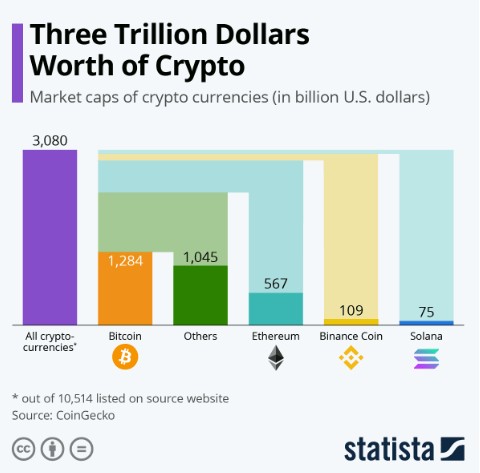
For investors wondering which crypto is the best investment, the landscape had expanded dramatically. Popular crypto coins now included not just Bitcoin and Ethereum, but newer entrants like Solana and XRP. Each came with different risk profiles, technological approaches, and market positions. The choice wasn't simple.
Bank of America's Allocation Range
Bank of America announced that its financial advisors could recommend crypto allocations ranging from 1% to 4%. That range was an advisor allocation proposal, not a Vanguard allocation. It showed how some financial institutions were beginning to treat crypto as a limited part of a diversified portfolio.
The Bank of America range provided a separate example of how mainstream finance was starting to approach crypto. Rather than treating it as an all-or-nothing bet, they were framing it as a small slice that could coexist with traditional holdings. The announcement was even reported as contributing to a noticeable uptick in Bitcoin's price.
This approach aligned with what Jeff John Roberts had been arguing. He asked whether a 1% position was fundamentally different from allocating 10% or 50% of family wealth to crypto. The answer, in standard portfolio theory, is yes - a small position in a volatile asset can fit within a diversified plan, while a large concentration is genuinely dangerous.
Vanguard Still Won't Make Its Own Crypto Products
Despite opening the platform, Vanguard maintained its distance from actually creating crypto products. They didn't launch their own Bitcoin ETF or Ethereum ETF. They didn't start a crypto index fund. This wasn't just a technical decision - it was a philosophical one.
Vanguard's core business model revolves around low-cost index funds. Their philosophy is that most investors do better with broad market exposure than with individual asset picking. Creating a Bitcoin ETF would mean they were essentially endorsing crypto as an investment class, something their leadership clearly wasn't ready to do fully.
This left them in an interesting position. They were facilitating their customers' access to crypto while still expressing deep skepticism about its long-term prospects. It was a compromise - let customers make their own choices, but don't help them make those choices.
The company's stance on Bitcoin's speculative nature remained unchanged. They still characterized it as an asset that could fall to zero. But they removed the barrier that had prevented their customers from buying existing crypto ETFs. It was a subtle but significant distinction.
Diversification and Small Crypto Allocations
The portfolio guidance emphasized keeping long-term goals in sight and treating any cryptocurrency position as a small, experimental part of a diversified plan. The available sources did not provide a specific Vanguard crypto allocation percentage. They left that decision to individual investors and their advisors.
Several different small-allocation examples appeared in investor discussions:
Reader examples of crypto allocations
- A few hundred dollars in Bitcoin or Ethereum as experimental exposure
- An Ether position at less than 0.1% of total portfolio
- A 1% Bitcoin allocation as an inflation hedge
- An equal split between Bitcoin and Ether at 5% of portfolio
- Positions ranging from less than 0.1% to as much as 5% or 10%
Roberts's central distinction was between a small, volatile asset inside a diversified portfolio and a large concentration in crypto. Standard portfolio theory, as he described it, allowed for small positions in volatile assets while emphasizing diversification. The question wasn't whether crypto belonged in portfolios - it was about how much was reasonable.
Some readers argued that investors didn't need to purchase crypto directly because broad equity indexes already hold companies that may have cryptocurrency-related businesses. The Vanguard Total Stock Market Index Fund was described by some as providing indirect or "proxy" exposure. These were reader observations rather than official Vanguard statements about the purpose of their index funds.
The portfolio guidance said to keep long-term goals in sight and treat any crypto position as a small, experimental part of a diversified plan.
A 2021 example described an investor who had started with $10,000 in 2015, reached a substantial portfolio by 2021, and later allocated a small percentage equally to Bitcoin and Ether. Crypto subsequently grew to a larger share of the portfolio without additional purchases. The investor planned to prevent crypto from exceeding a certain percentage of the portfolio and continued to regard index fund holdings as the core of their financial independence strategy.
JL Collins on Crypto as Religion
JL Collins addressed cryptocurrency in a post. His central description characterized crypto as resembling a religion: believers regarded it as a revealed truth, while nonbelievers considered it irrational or dangerous. Collins said he was not a believer but was intrigued by the phenomenon.

Collins argued that cryptocurrencies were too volatile to work well as actual currencies. People were unlikely to spend an asset they believed could be worth much more the next day. They were also unlikely to accept payment in an asset that could lose a large part of its value overnight. Secrecy could outweigh volatility in criminal transactions, but he questioned whether crypto could become a mainstream currency.
He classified cryptocurrencies as speculative assets and possible stores of wealth. Unlike a business or investment property, they did not produce cash flow or have a clearly defined intrinsic value. Their value depended on a future buyer paying more.
Would I invest? No. But I might speculate in one with a minor amount of money on the off chance it might explode on the upside.
Collins compared this mechanism with gold. Gold buyers could also depend on future demand rather than current earnings, but a rise in value was not guaranteed. He viewed Bitcoin as the closest equivalent to a crypto "Kleenex," while also mentioning that the number of available cryptocurrencies was staggeringly large. Investors faced an enormous number of choices and would have difficulty identifying which, if any, would become established.
Blockchain Tech vs Token Speculation
Several people distinguished the underlying blockchain technology from the market value of individual cryptocurrencies. One person described blockchain as a shared ledger - not controlled by one entity and not easily rewritten. Unlike traditional databases, it was permanent and examinable.
This type of shared ledger could eventually be useful for property records and other systems that traditionally rely on title insurance, physical documents, or centralized databases. Large companies had begun developing blockchain technology for business transactions before crypto tokens became widely discussed. IBM was referenced as an example of institutional involvement.
Crypto's main use cases
- Currency - medium of exchange for goods and services
- Commodity - a tradeable digital asset
- Store of value - digital gold alternative
- Blockchain technology - shared ledger applications
Some proposed stablecoins as a bridge between crypto and conventional finance. Stablecoins pegged to dollars or other national currencies were mentioned with advertised yields. But those yield levels were raised as questions rather than established as safe or sustainable returns.
Concern also arose about quantum computing potentially disrupting current cryptographic systems. And there was debate about whether central banks might eventually issue regulated digital currencies of their own.
Reader Views on Crypto Exposure
The discussion around crypto contained sharply different positions on small allocations. One reader said that owning no cryptocurrency could itself be a mistake. They argued for portfolio exposure somewhere between a small fraction and a larger slice. Another said that a few hundred dollars was enough to preserve upside potential while limiting downside.
A reader who owned Ether said it represented less than 0.1% of the portfolio and could either disappear or double without materially changing holdings. Another described a small Bitcoin position as an attempt to preserve freedom and flexibility in a changing monetary and technological environment.
A small allocation could provide exposure to a technology that might grow significantly, while a larger position was clearly dangerous.
Other participants argued that cryptocurrency was pure speculation because it produced no cash flow, fluctuated sharply, and could be manipulated by prominent figures. One pointed to changes in token prices after social media activity and contrasted that environment with publicly traded companies, which face securities regulation and oversight.
Still others maintained that broad equity indexes were a more practical route to crypto exposure. If crypto became a large part of the economy, companies in a broad stock index might capture some of that growth. The Vanguard Total Stock Market Index Fund was one popular vehicle for this approach.
Some readers who had made small allocations emphasized that the position should be treated as a speculative experiment rather than part of the core retirement portfolio. Every speculative asset is still part of total net worth, they noted.
Bitcoin as Insurance or Hedge
Some saw Bitcoin as portfolio insurance or a hedge against monetary instability, inflation, or changes in the U.S.-dollar system. They linked to videos about Bitcoin as insurance for a financial-independence portfolio and as a hedge related to the bond market.
Collins's disaster analysis was more conditional. He accepted that some people viewed Bitcoin as digital scarcity or an alternative to gold, but emphasized that it depends on electricity, internet access, and functioning infrastructure. His concern was that a global systemic collapse could make crypto inaccessible at the same time it might be most desired.
In a civilization-wide breakdown, physical gold might be more useful. In a disaster that required crossing borders, crypto could potentially be more accessible. The value of crypto as disaster insurance depended heavily on the specific scenario. It wasn't a universal solution.
Energy and environmental concerns also loomed large. Proof-of-work cryptocurrencies were described as extremely energy intensive. A reader challenged the breadth of that criticism by distinguishing Bitcoin from Ethereum, which used a different process. The exchange showed that energy use differed across cryptocurrency networks rather than being identical for every digital asset.
Government Backlash and Regulation
Collins raised the possibility of governmental retaliation if cryptocurrencies became widely adopted. He argued that issuing currency was not only a public service but also a source of political power. Governments were unlikely to surrender that power without resistance.
His concern was that crypto could be used to move capital outside conventional banking and regulatory systems, potentially increasing pressure on governments to impose tighter controls. This dynamic had played out in various countries where governments restricted or banned crypto trading.
Regulatory development had been ongoing in both the United States and Europe. The Securities and Exchange Commission's approach to crypto ETFs had evolved from outright rejection to cautious acceptance. This regulatory maturation was one factor that helped push institutions like Vanguard toward greater openness.
But the regulatory landscape remained uncertain. Rules could change, and governments could take different approaches. The possibility of future restrictions was part of why Vanguard and others maintained their warnings about Bitcoin's speculative nature.
Complexity and the Average Investor
Collins wrote that he did not believe in investing in things he did not understand. Despite explanations from financially knowledgeable people, he found crypto impossibly complicated. His reasoning was that if an asset was too complex for him to understand, it was likely too complex for many ordinary investors.
The concerns included the number of available assets, the difficulty of comparing them, the absence of conventional valuation methods, the need for specialized knowledge, and the possibility that apparent simplicity in a user interface could hide substantial technical complexity. These weren't minor details - they affected whether average investors could make informed decisions.
For someone asking whether crypto coin is a good investment, the complexity itself was a barrier. Without understanding the underlying technology, the economic models, and the regulatory risks, it was hard to evaluate whether any particular coin deserved a place in a portfolio. This was especially true given the thousands of available tokens.
Key questions for crypto investors
- What is the actual utility of this token or coin?
- How does it differ from existing popular crypto coins?
- What are the regulatory risks in your country?
- Can you afford to lose the entire investment?
- Does this fit your overall financial goals?
These questions didn't have easy answers. But they were the right place to start for anyone considering whether investing in cryptocurrency made sense for their situation.
The Bottom Line for Regular Investors
Vanguard's shift shows how quickly the crypto landscape can change. The institution that once warned against crypto as an immature asset is now opening its doors to it - while still maintaining significant reservations. This isn't a full endorsement. It's more like a cautious experiment.
If you're thinking about investing in cryptocurrency, the key lessons are practical:
Practical takeaways for crypto investors
- Treat any crypto exposure as small and experimental, not core to your portfolio
- Keep your long-term financial goals in sight - don't let volatility shake your plan
- Use broad stock market index funds as your foundation
- If you can't afford to lose the entire position, it's probably too big
- Diversification matters more than picking the right token
When someone asks whether any single crypto coin is a good investment , the honest answer is that nobody knows for sure. The top cryptocurrency by market cap today might not hold that position forever. The popular crypto coins change as the market evolves.
The safest approach for most people is to think about crypto as a small, experimental position - not a core holding. Someone asking which crypto is the best investment should also ask themselves whether they're prepared for that money to disappear entirely.
Vanguard's move to let customers invest in crypto currency through third-party ETFs doesn't mean they've changed their fundamental view. They still worry that many worry that cryptocurrency is a bubble waiting to burst. Their shift is about access, not endorsement.
Keep your long-term goals in sight and treat any cryptocurrency position as a small, experimental part of a diversified plan.
For regular investors navigating this landscape, the best advice is simple: stay diversified, keep crypto exposure small, and remember that the same principles that worked for building wealth over decades still apply. Don't let the excitement of a new asset class override the boring, reliable work of consistent investing.



Comments on “How Vanguard's Shift on Crypto Currency Affects Everyday Investors”
No comments yet. Be the first to share your thoughts.