
- This is the hard way. You need a peer-to-peer networking layer, a consensus mechanism, cryptographic implementation, node software, block production, transaction validation, wallet infrastructure, and a method for reaching agreement when validators disagree.
- Bitcoin took years of development before public use. Ethereum was developed by a funded team before its genesis block.
- Cost estimates range from $50,000 to $500,000 or more. Development time is commonly 6 to 18 months or longer.
- You control all the rules, but you also own all the responsibility for operating and securing the entire system.
How to Create a Crypto Coin Without Getting Lost in Technical Details
5 October, 2026
0 comments
What Is a Crypto Coin Anyway
If you're here, you probably want to know how to create a crypto coin. Before we get into the how, let's sort out what we're even talking about. A crypto coin is the native asset of its own blockchain. Bitcoin is the coin of the Bitcoin blockchain. Ether is the coin of the Ethereum blockchain. That's the basic idea.
A token is different. A token is a smart contract deployed on an existing blockchain. USDC, USDT, UNI, LINK, and SHIB are all tokens. They live on Ethereum or another network rather than having their own chain. This distinction matters because it changes how hard it is to create something and what you actually end up with.
If you're learning crypto for dummies-style basics, this is the part where people get tripped up. Coins and tokens are not interchangeable. A coin runs its own network. A token runs on someone else's network. That's it. Keep that in your head as we go.
A token uses the infrastructure of an existing network. For example, USDC transactions on Ethereum pay gas fees to Ethereum validators rather than to Circle.

Market Context: Why People Make Coins
The crypto market has grown to the point that creating a new token is technically easy. Making it useful is not. Estimates vary, but one source reports more than 36 million cryptocurrencies with a total market capitalization of roughly $2.3 trillion. Another source cites more than 50 million tokens. These figures should be treated as separate estimates rather than one clean number.
Bitcoin accounts for about 57% of the market. More than 560 million people worldwide own some form of cryptocurrency. But low barriers have also created high failure rates. An analysis of Pump.fun, a Solana launchpad, found that 98.6% of tokens created there collapsed into pump-and-dump schemes, often within hours. Another source says most tokens launched were trading below their initial token generation event prices, with a median decline of more than 70%.
A basic token can now be generated in minutes. No-code tools can deploy one in less than 15 minutes. The deployment speed does not address the main challenge.
How Do Crypto Currencies Work
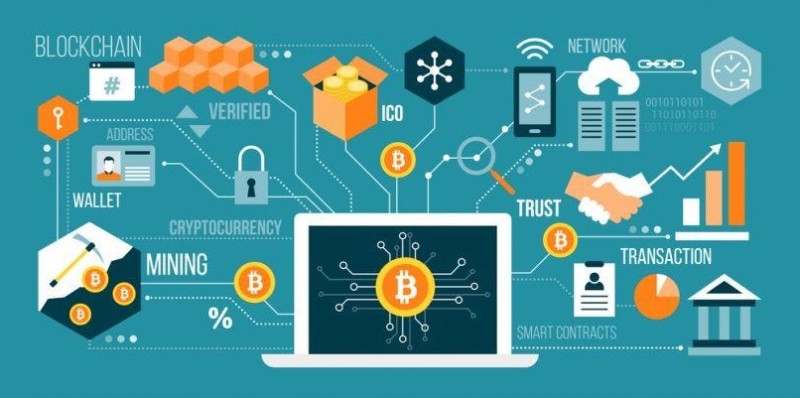
To understand how to create a crypto coin, you need to understand how do crypto currencies work at a basic level. A blockchain is a shared ledger. Transactions get grouped into blocks. Each block links to the previous one. That's where the name comes from - blockchain what is a block is a fair question, and the answer is just a chunk of recorded transactions.
Validators or miners keep the network running. They check that transactions are legit and add them to the chain. In exchange, they earn the network's native coin. That's the incentive that keeps things moving.
Smart contracts are the next layer. These are programs that run on the blockchain. Tokens are smart contracts. When you deploy a token, you're writing code that lives on an existing chain and follows rules everyone can see.
The Three Ways to Create a Crypto Currency
So how do you create a crypto currency? There are three main paths. Each one is a different balance of difficulty, cost, and control.
Build a New Blockchain
Fork an Existing Blockchain
- Start with open-source code of an existing blockchain and modify it. Bitcoin Cash was created by forking Bitcoin. Litecoin began with a modified Bitcoin codebase.
- This removes some uncertainty around creating cryptographic code from nothing, but you still need to modify the codebase, build and test release software, operate or coordinate nodes, recruit validators, establish wallet and exchange support, build a community, and demonstrate a meaningful difference from the original chain.
- Estimated cost: approximately $20,000 to $100,000. Time: three to six months.
Create a Token on an Existing Blockchain
- The fastest route. Write a smart contract to a standard like ERC-20, SPL, or BEP-20, test it, and deploy to a public network.
- This avoids building consensus, networking, node infrastructure, or a wallet from the ground up.
- A simple deployment may cost only a few dollars in gas. A development team, audit, documentation, integrations, and professional launch work can raise the total to $50,000 or more.
- No-code platforms like TokenTool and CoinTool exist. Smithii is a browser-based option for creating an SPL token without writing Rust.
Some projects have validated demand with a token before creating or migrating to a dedicated chain. Chainlink, BNB, and Tron are described as having started as ERC-20 tokens on Ethereum before later moving to their own chains. This approach tests the idea with less infrastructure before committing to a new network.
A separate smart contract does not make every part of the project decentralized. The creator still controls the initial supply, administrative keys, minting functions, liquidity, distribution, and upgrade authority.
Step 1: Define the Purpose and Use Case
Before writing any code, answer this: what problem does this asset solve? A project needs a specific reason to exist. Here are common use cases:
Common Use Cases
- Payments or medium of exchange - Native coin or stablecoin like BTC or USDC
- Governance - Governance token like UNI or AAVE that gives holders voting rights
- Meme or community culture - Meme coin like DOGE, SHIB, or PEPE
- DeFi utility - Utility token like LINK or CRV
- Gaming or NFTs - In-game or ecosystem token like AXS or SAND
- Fundraising - ICO or launchpad token
- Access to a service - Utility or membership token
A governance token gives holders voting rights. A utility token unlocks access to a service or application. A payment token moves value inside a platform. A gaming token can purchase assets or participate in an in-game economy. A stablecoin is designed to track a currency such as the U.S. dollar.
Meme coins follow the same technical process as other tokens. The distinguishing elements are branding, community strategy, timing, and social distribution. One source states that meme-coin outcomes depend heavily on community virality, social momentum, and influencer attention more than on the technology itself.
Before choosing a blockchain, determine whether decentralization is actually necessary. Building an application on Ethereum can be much more expensive than using a centralized cloud service. A token should have a strong reason for existing on-chain rather than being added only because the project uses blockchain terminology.
Step 2: Design Tokenomics
Tokenomics is the economic design of the asset. It determines how the project behaves even if the software works correctly. The design should address total supply, initial and circulating supply, distribution, team and investor allocations, treasury allocation, community rewards and airdrops, liquidity allocation, mining or staking methods, vesting and lockups, token-sale allocations, minting, burning, inflation or deflation models, and conditions for changes.
Illustrative Allocation Model
- Total supply: 1 billion tokens
- Initial circulating supply: 200 million, or 20%
- Team allocation: 15% to 20%, normally vested
- Community and airdrop allocation: 10% to 15%
- Liquidity pool: 10% to 20%
- Treasury: 10% to 15%
- Burn mechanism: optional
These figures are examples rather than a universal allocation. Projects with major team or investor holdings can use lockups, cliffs, staggered vesting, or other mechanisms to reduce the risk of a large immediate sell pressure. One project cited had insiders controlling 80% of supply without a lockup and sold at launch. A transparent cap, vesting schedule, and circulating-supply figure allows potential users to understand who can sell, how much can enter circulation, and when allocations become liquid.
Token distribution methods can include mining, staking, airdrops, ecosystem rewards, a public token sale, a private presale, treasury allocations, and liquidity provisioning. Any sale, airdrop, or insider distribution can create tax and securities-law obligations in relevant jurisdictions.
A transparent cap, vesting schedule, and circulating-supply figure allows potential users to understand who can sell, how much can enter circulation, and when allocations become liquid.
Step 3: Choose a Blockchain
The host chain determines transaction costs, speed, available development tools, wallet support, liquidity, user base, and the type of smart contract you can deploy. Here's a comparison of common options:
Blockchain Options
- Ethereum - ERC-20 standard. Transaction cost about $1 to $10. Speed about 15 seconds. Largest DeFi ecosystem. Best for DeFi and established projects.
- Solana - SPL standard. Transaction cost about $0.00025. Speed about 400 milliseconds. Fast-growing, popular for memecoins. Best for high-speed and low-cost applications.
- BNB Chain - BEP-20 standard. Transaction cost about $0.05. Speed about 3 seconds. Large Asia-focused ecosystem. Good for lower-cost launches and retail applications.
- Polygon - ERC-20 on an L2. Transaction cost less than $0.01. Speed about 2 seconds. Ethereum-compatible. Good for lower-cost Ethereum applications.
- Avalanche - ARC-20 standard. Transaction cost about $0.05. Speed about 1 second. Subnet model. Good for custom networks and fast applications.
- Cardano - Native tokens. Transaction cost about $0.10. Speed about 20 seconds. Research-oriented. Good for native assets and research projects.
- Base - ERC-20 on Coinbase L2. Very low transaction cost. Consumer crypto ecosystem.
The figures are estimates and can change with network demand. BNB Smart Chain and Polygon are presented as beginner-friendly balances of low cost, development tools, and market access. Ethereum is described as the established option for DeFi credibility and liquidity. Solana is emphasized for speed, scalability, gaming, NFTs, and low fees.
Canton Network as a Privacy-Focused Option
Canton is a network designed for institutional finance and configurable privacy. Its public-network vision grew out of private permissioned deployments. A basic private Canton deployment has two main components: validator nodes and a Canton synchronizer.
Validators run smart contracts written in the Daml smart-contract language and hold relevant smart-contract data. The synchronizer routes and orders messages between validators and keeps their transaction sequence coordinated. Canton uses a proof-of-stakeholder consensus model. For a given transaction, only the validators connected to the relevant stakeholders validate that leg of the transaction.
Canton does not give every validator a copy of everything. Each validator receives only data relevant to its users. The synchronizer routes encrypted packages that it cannot decrypt - comparable to a postal service handling sealed envelopes without seeing their contents.
The Canton Coin description includes several stated properties: every Canton Coin in circulation was earned by participants providing network utility, there was no presale, ICO, or team-reward allocation, and the tokenomics use a mint-and-burn equilibrium mechanism intended to reduce volatility in the dollar conversion rate.
Step 4: Choose a Token Standard and Build the Contract
Token standards define how wallets, exchanges, and applications interact with an asset. Using a recognized standard avoids custom integration work. ERC-20 and BEP-20 are identified as practical starting points because wallets, exchanges, and DeFi protocols support them widely. SPL is used for tokens on Solana.
Common Token Standards
- ERC-20 - Ethereum and compatible networks - Fungible - Standard utility and governance token
- ERC-721 - Ethereum - Non-fungible - Unique token with its own identity
- ERC-1155 - Ethereum - Multi-token - Supports fungible and multiple NFT types in one contract
- BEP-20 - BNB Smart Chain - Fungible - BNB Chain counterpart to ERC-20
- SPL - Solana - Fungible and NFT support - Token program used by Solana applications
- ARC-20 - Avalanche - Fungible
- Native asset - Cardano - Moves through a node rather than a separate token contract
OpenZeppelin provides audited contract libraries. A developer can import an ERC-20 implementation and configure the token name, ticker or symbol, total supply, decimals, minting, burning, access controls, pausing, and upgrades. Standard transfers, balances, and approvals are handled by established implementations. Custom features such as transfer taxes, automatic liquidity provisioning, complex distribution, rebasing, or nonstandard minting require additional work and introduce additional opportunities for bugs.
A simplified ERC-20 contract can be created with OpenZeppelin. The example mints the initial supply to the deployer's wallet. The name, symbol, supply, and added features can be changed to fit the project.
Common development tools include MetaMask for browser-wallet connection, Hardhat and Foundry for Ethereum development, Remix IDE for browser-based Solidity development, Truffle for Ethereum development and testing, OpenZeppelin for audited contract components, testnet faucets for valueless test tokens, Smithii for browser-based SPL-token creation, TokenTool and CoinTool for no-code token creation, and block explorers like Etherscan, Solscan, and BscScan for contract verification.
Step 5: Test on a Testnet
A testnet mirrors the selected blockchain but uses valueless test tokens. Deployment should be tested before real funds or a mainnet launch are involved. Testing should cover normal transfers, transfers to multiple wallets, transfers of zero or unusually small amounts, maximum balances, minting above or below the intended cap, burn behavior, decimal precision, access controls, minting and burning permissions, pausing and unpausing, ownership and administrative functions, integration with wallets and DeFi protocols, behavior when a transaction is interrupted, and interactions with other contracts.
Test

Comments on “How to Create a Crypto Coin Without Getting Lost in Technical Details”
No comments yet. Be the first to share your thoughts.