
- Private keys: You control them (self-custodial) vs The CEX controls them (custodial).
- Account recovery: Seed phrase (self-custodial) vs Email/password reset (custodial).
- Counterparty risks: Limited (self-custodial) vs Higher (custodial).
- Insurance protections: None (self-custodial) vs Varies based on the company (custodial).
- Security responsibility: You (self-custodial) vs The CEX (custodial).
- Support options: Usually limited to online FAQs or tutorials (self-custodial) vs Email, live chat, and/or phone service (custodial).
What Is A Self Custodial Wallet And Why You Control Your Own Keys (No Help Desk Required)
11 October, 2026
0 comments
What Is A Self Custodial Wallet
You ever wonder what is a self custodial wallet? I mean really wonder, like late at night when you're thinking about where your crypto actually lives. For me the short version is this: it's the kind of wallet that puts your private keys in your own hands, not some outfit holding them for you like a bank that can freeze your account on a whim. The main word here, what is a self custodial wallet, is just a crypto wallet where you keep your own keys. Nobody else holds your money. You're the boss of security and access. That's terrifying and freeing, like being handed the keys to a bank with no teller and no free lollipop.
Self-custody in crypto is the practice of personally managing and securing your own crypto assets without relying on third-party services, such as exchanges or custodial wallets. You have full control over your private keys, the cryptographic keys that grant access to and control over your crypto assets. When holding your own private keys, you eliminate the risk associated with entrusting your assets to an external entity. It lines up with the original ethos of cryptocurrencies: decentralization and financial sovereignty. It empowers people to have full autonomy over their investments.
A self-custodial wallet is also known as a Web3 wallet or a non-custodial wallet. The words get used a lot but they point to the same idea. You hold the keys, you hold the coins. This is the best way to own crypto if you don't want a company in the middle of every move you make. Most folks say wallets "store your tokens" but that's not quite right. Wallets only contain the cryptographic keys associated with specific blockchain addresses. The coins stay on their decentralized networks. The wallet gives you access via private and public keys.
Private Keys And Seed Phrases
Every crypto wallet contains one or more pairs of keys. One public key, one private key. They are lengthy alphanumeric sequences, typically 25 to 36 characters long. The public key is like a bank account number. You share it with anyone who wants to send you crypto. The private key is like your debit card PIN. It must be safeguarded because anyone who has it can move the funds.
When you set up your self-custodial wallet, you'll typically receive a seed or recovery phrase. It's made up of 12 to 24 English words. This seed phrase is like a master key. It generates one or more private keys. It also serves as your backup password if you ever lose access to your crypto wallet. A self-custody wallet will typically include a seed phrase, also known as the secret recovery phrase. As a result, it is critical that you write down the seed phrase and keep it safe from unauthorized access.
Anyone who knows your private key has complete access to the crypto stored in your wallet.
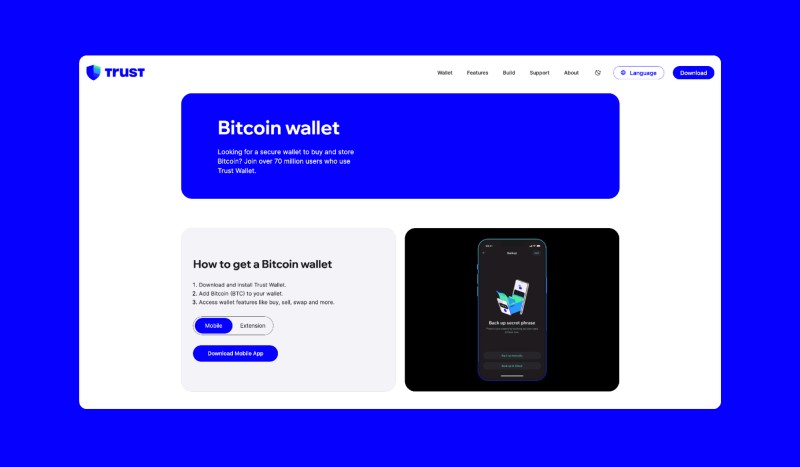
The seed phrase is the thing you never type into a website. You never email it. You never screenshot it and leave it on a cloud drive. Hey, don't skip this part. If the wrong person gets that phrase, they can wipe out all of your assets from anywhere. The phrase functions as a master key, allowing you to access or recover your wallet from anywhere at any time. It is critical that you write it down on paper and keep it separate from your phone.
Self-Custody Vs Custodial Wallets
Crypto wallets split into two groups: non-custodial and custodial. Custodial wallet services include offerings from crypto exchanges like Kraken and Coinbase where a third party has control over your private keys. With a non-custodial wallet, like the BitPay Wallet, the user is the only one with access to their private keys. The tradeoff is less responsibility vs more direct control. You give up convenience, you gain sovereignty.
Key differences between wallet types
A custodial wallet service holds on to the private key, so it is responsible for safeguarding a user's funds. A non-custodial wallet gives users full control over their private key, and with it sole responsibility for protecting their holdings. When we talk about custody, what's taken custody of isn't the funds. It's the private key needed to gain access. The old saying in crypto circles is "not your keys, not your crypto." Whoever holds a private key is the only true owner of the funds.
Not your keys, not your crypto.
Custodial wallets are nearly always web-based and provided by centralized crypto exchanges like Coinbase. Most exchanges' interfaces are designed so users never interact with their wallets directly. This user-friendliness means custodial wallets are generally preferred by newcomers. Custodial wallets also give users peace of mind that a lost password doesn't mean lost funds. Most of the time providers can simply reset your password. If a non-custodial wallet holder loses their private key, their funds could be unrecoverable.
Why Centralized Exchanges Can Fail You
Keeping your digital assets on a centralized crypto exchange feels safer since many trading platforms comply with regulations and have high encryption standards. But even the largest CEXs have weaknesses. As previous collapses like Mt.Gox and FTX demonstrate, when a CEX fails there's a chance you won't get your Bitcoin back. Your crypto assets are only as secure as the company holding them. If you'd rather take risk management into your own hands, you can move your cryptocurrencies off centralized platforms and into self-custodial solutions.
With a self-custody crypto wallet, you avoid intermediaries and get the freedom to manage your tokens personally. Following the largest decline of a centralized exchange, which occurred to the FTX platform in 2022, several crypto users and investors have been rethinking how to securely store their cryptocurrency, with many moving their assets to a self-custody crypto wallet. I'm not saying custodial is evil. I'm saying it's a different risk. You trade counterparty risk for personal responsibility.
Your crypto assets are only as secure as the company holding them.
Another concern around custodial wallets is theft. Exchanges are known to be the holders of private keys, and their services are interacted with online, which makes them a continuous target for hackers. Billions of dollars are lost to cybercriminals every year. You could even lose your funds to government seizure in the event an exchange that holds your private key goes bankrupt. Using a custodial wallet requires a great deal of trust in the institution.
Benefits Of Using A Self-Custody Crypto Wallet
One of the main benefits of using a self custody wallet is the level of control it offers. When you hold your own private keys, you have full authority over your digital assets. You can transact at any time without third-party approval or restrictions. This autonomy ensures that your assets are always available to you, free from external intervention. Complete control means you have complete control over your assets at any time, from any location, and without interruption.
Security is a critical concern in crypto. When managing your own private keys, you reduce the risk of hacks and breaches that are prevalent in centralized exchanges. A self custody crypto wallet, particularly hardware wallets, offer security features that safeguard your assets from online threats. This decentralized approach ensures that even if a portion of the network is compromised, your individual wallet remains secure. The safest way to store cryptocurrency for most long-term holders is a hardware device kept offline.
Privacy is another key advantage. When you use a blockchain wallet for self custody, your transactions are not subject to the same level of scrutiny and data collection as they are with custodial services. Your financial activities remain private and are not shared with third parties. A self-custody wallet does not require any personal information to access or transfer funds, allowing your transactions to remain anonymous. Using a self custody blockchain wallet can also lead to reduced fees, since centralized exchanges often charge for transactions and withdrawals.
Noted benefits of self-custody wallets
- You control your keys, meaning total control over your crypto.
- Fast and easy to create new wallets.
- No counterparty risk from exchange failure.
- Assets not impacted by centralized exchange hacks.
- No KYC or AML process necessary for creating/storing.
- More advanced functions and features than custodial services.
One of the most compelling reasons to adopt self custody is independence from third-party failures. Custodial services are not immune to operational failures, regulatory issues, or insolvency. When holding your own private keys, you protect your assets from such risks. Self custody cuts down on counterparty risks. You also get multiple wallets from the same seed phrase, and access to DeFi protocols such as staking and farming.
Types Of Self-Custody Wallets
In the realm of self custody, your choice of wallet plays a role in the security and usability of your digital assets. There are two major types of wallets for self-custodial storage: hot wallets and cold wallets. They both give you control while securely storing your assets, but they differ in how they operate and provide access.
Hot wallets are self-custody wallets that are always connected to the internet. These include mobile wallets, desktop wallets, and smart contract wallets. Hot wallets are software programs available as mobile apps and browser extensions, often free to download. They are affordable and convenient. You can instantly start transferring crypto after download. The major drawback is vulnerability to hacks because they are always connected. Most users keep only a portion in hot wallets and avoid long-term storage there.
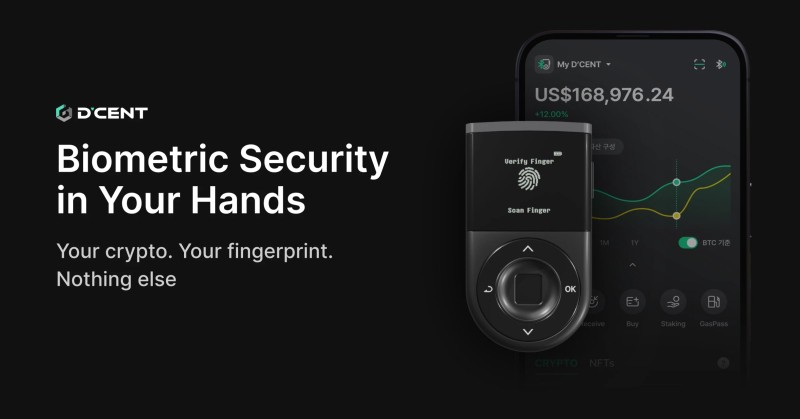
Cold wallets are self-custody wallets that are not linked to the internet or any network. This type stores private keys offline, so it's less vulnerable to theft. The first cold wallets were printouts of QR codes, called paper wallets. Today, hardware wallets like Ledger and Trezor are far more common. A hardware wallet is a cryptocurrency storage device that uses a tamper-proof electronic device to protect the user's private key. Since hardware wallets aren't free and take more steps to use, they're best for investors who prioritize security and want to hold for the long term.
Hot versus cold self-custody wallets
- Hot wallets: always online, convenient, more hack risk.
- Cold wallets: offline, less theft risk, slower to use.
- Paper wallets: printed keys, free, easy to damage or lose.
- Hardware wallets: USB-like devices, best for long-term hold.
Hardware wallets are considered the most secure form of self custody as they offer a high level of protection from online threats.
What Is A Hard Wallet For Crypto
Let's slow down on the cold side. What is a hard wallet for crypto is a question I hear a lot from friends. A hard wallet is just another name for a hardware wallet. It resembles a USB thumb drive and is only online when connected to a computer or mobile device. The signing of transactions using the private key happens within the device itself. It is only sent to be confirmed by the blockchain once it's back online. This makes non-custodial hardware wallets virtually impervious to hackers.
Some users combine a hardware wallet with a backup, either a paper wallet or a metal key that resembles a credit card. You still need to protect your cold wallets from damage, misplacement, and theft. The cold storage cryptocurrency wallet idea is simple: keep keys off the net so thieves on the net can't reach them. It's not magic. It's just distance from the attack surface.
Software Wallets And The Blockchain Wallet App
Software wallets are applications or programs that store private keys on your device, such as a desktop or mobile phone. They are easy to use and give convenient access, often at no or low cost. They are, however, vulnerable to malware and hacking, relying heavily on the security of the device they are installed on. Some non-custodial wallets are browser-based, but there are a few other types available.
Software wallets store and encrypt private keys on a computer hard drive. But the most secure type of all is a hardware wallet. Still, a good blockchain wallet app is what most people touch every day. It's the thing on your phone that shows balances, sends coins, and talks to DeFi sites. You can have a hot software wallet and a cold hardware wallet from the same seed. The app is the front door. The hardware is the vault.
How To Open A Crypto Wallet
If you're new, the first step is the simplest to say and the easiest to mess up. How to open a crypto wallet starts with a choice: download a hot wallet app or buy a hardware wallet. In either case, triple-check that you're on the wallet's official website before downloading or making a purchase. If you get a hardware unit, you'll also need to connect it with USB or Bluetooth to the wallet's official app.
After that, you should see an option to create a new wallet, which will generate and display your seed phrase. Since this phrase is your backup recovery method, print it out or write it down before proceeding. Carefully check the spelling and word order. Many self-custodial wallets also ask you to set up a PIN or password for regular wallet access. Creating a new non-custodial wallet in the BitPay app is fast: open app, click wallet icon, click "Get Started", enable cryptocurrencies, scroll and click "Create", read prompts, choose secure password.
Be absolutely certain to create a back-up of the 12-word recovery phrase; if lost, cannot access funds.
For Cwallet, the steps are: download and install app, on homepage tap switch button upper left corner, switch to non-custodial wallet, click CREATE NEW WALLET to have account. That's the whole thing. No bank visit. No form. No permission slip. Just you and the keys. How do i create a cryptocurrency wallet is not a mystery once you see the buttons.
Receiving And Sending Funds
If you want to transfer crypto from a CEX account to your self-custodial wallet, locate the relevant asset in your wallet account and look for the receive option. You should find a blockchain address that you can paste into your CEX account. Suppose you have some BTC in a Coinbase account and you want to send it to your new Trust Wallet. You'd find BTC on Trust Wallet, select "Receive", and copy the provided address or keep QR code open.
Open Coinbase, find BTC, choose "Withdraw". Enter amount. Paste address or scan QR. Confirm transfer. After that, BTC heads to blockchain for processing, typically a few minutes to a few hours depending on network activity. One mistake people make: copying any address assuming single master address, or using addresses for similar-sounding cryptocurrencies like BCH vs BTC. That causes loss. Blockchain addresses only work with respective currencies.
Sending from self-custodial wallet to exchange follows a similar process. Enter recipient address from exchange into wallet. Example: send ETH from MetaMask to Coinbase. Copy ETH deposit address from Coinbase. Open MetaMask, find ETH, choose "Send". Enter amount, paste recipient address, review gas fees before confirming. Whenever you transfer digital funds into a self-custodial wallet, they'll stay there until you choose to move them.
Choosing The Safest Crypto Wallet
As a general rule, cold storage devices are safer than hot wallets because of their offline design. It's still possible for someone to steal crypto from a hardware wallet if they have your private key, or if they get both the device and your PIN. But that's a far less likely scenario than a hot wallet hack. How safe a wallet is depends on the company that creates and maintains it. Some CEX hot wallets can have higher security standards than hardware wallet manufacturers.
Whether or not the company issues open-source code can increase or decrease a wallet's safety profile. This is a subjective judgment. Some users feel that releasing open-source code shows transparency. Others view this feature as a threat because hackers can examine code and exploit bugs. Typically, a high-quality hardware wallet from a reputable company is the safest option, especially if provider offers additional security features such as optional passphrases. But there are no guarantees, so some traders spread risk by using multiple wallets.
Self custody is not without its challenges, particularly the responsibility of securely managing your private keys.
If you lose or forget your private key or recovery phrase, you will lose all of your funds in a self-custodial wallet. The biggest downside: if you somehow lose your private key, your wallet and your seed phrase, there will be no way to recover your funds. Therefore, keep your wallet's secret phrase in a safe place, create multiple backups of your secret phrase, and store each separately. That's the part nobody warns you about until it's too late.
How To Safely Store Crypto
Let's talk plain about how to safely store crypto without sounding like a security firm. The base rule is split your risk. Keep spending money in a hot wallet. Keep savings in a cold wallet. Write the seed on paper, then store that paper where a fire or a flood won't eat it. Some folks etch it into metal. I'm not fancy, but I get the logic.
Then there's the daily habit part of how to keep your crypto safe . Watch for phishing links. Add two-factor authentication on the accounts that touch your exchange side. Test any new wallet with a small send before you move the big stack. And link your wallet's public addresses to crypto tax software so you can track transactions and stay compliant with IRS requirements. None of this is hard. It's just easy to skip.
Simple safe storage habits
- Split funds: hot for daily, cold for long-term.
- Write seed phrase on paper, store away from device.
- Make two backups of the seed, keep them apart.
- Turn on 2FA where the wallet or exchange allows it.
- Send a small test amount before large transfers.
Best Trezor Cold Wallet Options
Trezor launched in 2014 by Czech company SatoshiLabs. The Trezor Model One was the world's first mass-produced hardware wallet. From the start, Trezor emphasized its open-source code to promote transparency. Newer models, like the Trezor Safe 5 and 7, come with sleeker designs and touchscreen displays. They also offer secure element chips and extra safety features, such as optional passphrases to better protect seed phrases.
If you ask me for the best trezor cold wallet , I'd point to the model that fits your hands and your threat model. The Safe 5 is a solid pick for most people who want a screen and a touch interface. The Model One is cheaper and still does the job for basic storage. Both keep keys offline. Both need you to protect the device and the seed. The wallet is only as safe as the human holding the paper.

Examples Of Self-Custodial Wallet Providers
Trust Wallet is a secure self custody crypto wallet where you can store, manage and transact with your crypto. It lets you manage and interact with 10M+ crypto assets across 100+ blockchains. Available as mobile crypto wallet for iOS and Android, it also offers a browser extension. Viktor Radchenko released Trust Wallet for the Ethereum blockchain back in 2017, and Binance acquired it in 2018. Although Trust Wallet is one of Binance's properties, it's still a self-custodial wallet.
MetaMask began as a hot wallet for Ethereum and remains closely associated with the Ethereum virtual machine ecosystem. This wallet offers a browser extension and mobile app on multiple blockchains and boasts over 100 million users. Thanks to its ubiquity in Web3, MetaMask is closely associated with DeFi activities and NFT trading. Ledger made its name with the flagship Ledger Nano S hardware wallet shortly after Trezor's debut. BitPay Wallet is a mobile non-custodial crypto wallet which allows users to buy, store, swap and spend crypto.
Notable non-custodial wallet providers
- BitPay Wallet: mobile, multisig, optional key encryption.
- Trust Wallet: mobile and extension, 100+ blockchains.
- Electrum: Bitcoin-focused desktop and mobile.
- Exodus: user-friendly software wallet.
- Edge Wallet: mobile non-custodial app.
- Blockchain.com: web and mobile self-custody.
- MetaMask: Ethereum and EVM browser and mobile wallet.
Tangem provides only hardware wallets and non-custodial software solutions for managing digital assets. Tangem is not regulated as a financial services provider or cryptocurrency exchange. Tangem does not hold, custody, or control users' assets or transactions. Cwallet is a simple, beginner-friendly wallet that supports 50+ networks and unlimited custom tokens. It combines custodial and non-custodial features in one app, with a switch between modes.
Advanced Self-Custodial Wallet Features
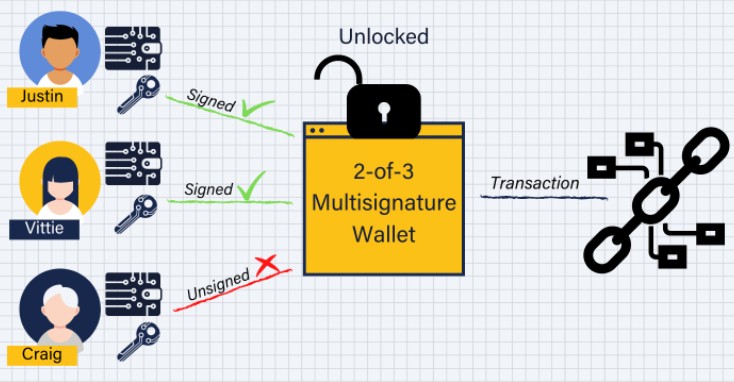
Eigen NCW is a self-custodial wallet with multi-signature to manage assets. Multi-signature means wallet transactions require authorization of multiple private key holders. Example: a 3-3 wallet shared by three people requires three signatures; a 2-3 wallet requires two signatures. To make payment, one creates and signs, sends to others to sign. The wallet requires at least half of signers to agree to initiate certain actions like social recovery or large transaction.
Social recovery is when wallet owner forgets private key and starts social recovery by initiating multi-signature to recover wallet. Ethereum co-founder Buterin noted "an emerging better alternative: a newer type of smart contract wallet called a social recovery wallet" with no single point of failure and maximum ease of transacting. Eigen NCW satisfies as social recovery wallet. Lockable means users can lock wallets if they find something vulnerable, and unlock whenever they want.
Compared with single-signature, hacker must crack multiple keys, exponentially harder.
Payment limitation supports fine-grained payment management, including large payment limits and daily payment limits. If amount exceeds limits, multi-signature mechanism triggers needing more than half guardians to approve. Characteristics include upgradeable and modular design. Modular design means simple base wallet holds funds and identity; authorized modules invoke wallet, each handles specific logic, can be added, removed, or upgraded. Security via multi-sig and social recovery. Scalability via modular design.
The Responsibility You Actually Sign Up For
Self custody is not without its challenges, particularly the responsibility of securely managing your private keys. If you lose or forget your private key or recovery phrase, you will lose all of your funds in a self-custodial wallet. Sending crypto from CEXs to self-custody wallets liberates you from certain counterparty risks. But that doesn't mean self-custodial storage is the inherently safer option. You assume full responsibility for your digital assets once they're in this type of wallet.
There's still some risk of hacks or theft. It's important to carefully consider which wallet type best suits your usage and risk profiles, and test any new hot or cold wallet before sending digital assets. The freedom is real. The burden is real too. I'm not trying to scare you off. I just don't want you to find out the hard way that no support line can undo a lost seed.
You assume full responsibility for your digital assets once they're in this type of wallet.
Comments on “What Is A Self Custodial Wallet And Why You Control Your Own Keys (No Help Desk Required)”
No comments yet. Be the first to share your thoughts.