
Why Your Tax Bracket For Crypto Depends On Holding Time (And Why Waiting Pays)
Your Tax Bracket For Crypto Explained: It's Mostly Patience
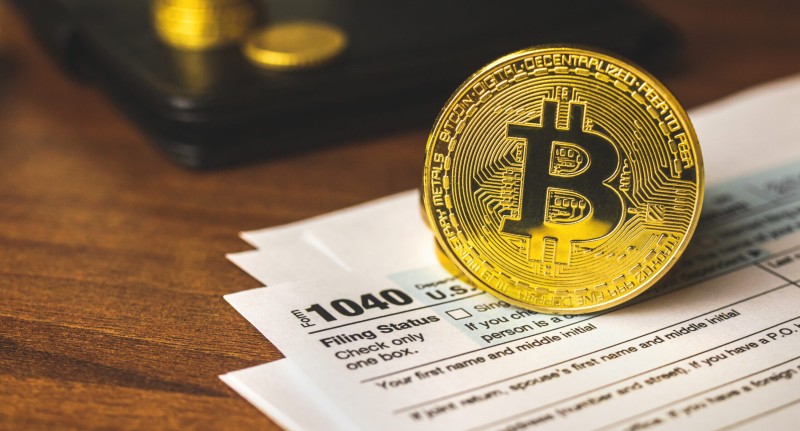
Your tax bracket for crypto isn't some beast under the bed. I used to think it was this scary math monster that would eat my coins. But it's mostly about time. Hold coins over a year and you'll likely owe less. That's the whole trick, mostly. The IRS sees crypto as property, not cash, since way back in 2014 with IRS Notice 2014-21. So when you sell, trade, or spend it, gain or loss follows the property rules.
I like to keep things simple because that's the only way I understand anything. The main word here is tax bracket for crypto and it hangs on how long you held the coin. Sell after a year and you often get a nicer rate. The source says crypto from mining, staking, airdrops, or rewards is typically ordinary income. And accurate portfolio tracking matters more now due to expanded crypto reporting guidelines.

Why The Irs Treats Crypto As Property
Under IRS rules, crypto is taxed as property, not as currency. This came from IRS Notice 2014-21, which said virtual currency is treated as property for tax purposes. Later IRS FAQs added more on virtual currency deals. The recently finalized Treasury and IRS rules on digital asset reporting refine cryptocurrency tax laws in the U.S., with more still on the way. Because it's property, the gain math follows Internal Revenue Code §1001.
The gain from sale is proceeds minus cost basis. Proceeds are what you got. Cost basis is what you paid plus buy fees. Sell fees cut the proceeds. So if you buy 0.5 BTC for $45,000 and pay $20 fee, then sell later for $55,000 with $50 sell fee, your proceeds are $54,950 and basis $45,020. Gain is $9,930. Simple enough.
Any transaction involving the "disposal" of an asset for value – whether through a sale or exchange – typically qualifies as a taxable event.
What Counts As A Taxable Event
Not every move in crypto land makes tax. Only specific things catch the IRS eye. Taxable events are actions that create a tax bill. Selling digital assets for fiat or other coins is one. Using crypto to pay for stuff is another. Earning crypto as passive income counts too. And receiving an asset as payment or reward is taxed as ordinary income, not capital gains.
Common taxable events in crypto
- Selling digital assets for fiat or other cryptocurrencies
- Using crypto to pay for goods or services
- Earning crypto as passive income like staking or mining
- Trading one token for another on a DEX or CEX
If you receive cryptocurrency as payment for products and services including mining and staking rewards, you pay ordinary income taxes. The fair market value at the time you got it is the taxable income. Gifts are usually not taxable until you sell and realize gain or loss. Holding and not using is fine, no bill.
Holding Period Decides Your Tax Bracket
The length of time you hold crypto is the key factor in your tax bracket for crypto. Generally, the longer you hold, the lower your tax burden. Gains split into short-term and long-term. The IRS uses "more than one year" for long-term. Short-term is a year or less and gets taxed as ordinary income. Long-term gets the nice rates.
Short-term capital gains are taxed at your income tax rate from 10% to 37%. Long-term capital gains are taxed at fixed rates of 0%, 15%, or 20% based on taxable income. That includes crypto gains and all other income after deductions. So your tax bracket for crypto really is your holding time in disguise.
Selling crypto held for a year or less incurs short-term capital gains tax, aligned with the taxpayer's ordinary income tax bracket.
Short Term Crypto Gains Tax vs Long Term
If you sell inside a year, you hit the short term crypto gains tax at your normal bracket. That can be as high as 37%. If you wait past a year, you drop to 0, 15, or 20 percent. The source gives an example: if you're in the 24% bracket and sell $1,000 of crypto after a few months, you owe $240. Hold over a year and that drops.
Another example from the guide: you bought Bitcoin for $1,000 and now it's worth $5,000. Sell now and you owe on $4,000 profit at short-term rate. Hold over a year and you may qualify for lower long-term rate. The wait pays, literally. I keep telling myself that when I want to panic sell.
Long Term Capital Gains Rates And Income Thresholds
Long-term capital gains rates are 0%, 15%, and 20%. The cutoffs shift with income. For single filers, 0% goes up to $48,350, 15% from $48,351 to $533,400, and 20% above that. Married filing jointly gets 0% to $96,700, 15% to $600,050, and 20% above. These numbers come from IRS guidance and change over time but the idea stays.
Long-term rate by income level
- 0% if taxable income at or below $48,350 single or $96,700 joint
- 15% if income between $48,351 and $533,400 single
- 20% if income above $533,400 single or $600,050 joint
- Head of household has its own mid points around $64,750 and $566,700
The rates themselves didn't change from old guidance, just the lines moved. For a basic case: you fall into a 15% crypto tax bracket, the capital gains tax on $9,930 gain is $1,489.50. That shows how the bracket math works in real life.
Figuring Your Gain With Cost Basis
You calculate gain as amount realized minus adjusted basis. Basis is average price paid plus buy fees. Proceeds minus sell fees is amount realized. One FIFO example: buy 1 BTC for $28,000, later buy 1.5 at $70,000, then 0.5 at $29,000. Sell 0.5 for $32,000. Using FIFO, cost basis is half of first buy $14,000, gain $18,000. LIFO would use $29,000 basis, gain $3,000.
Another small example: sell 0.02 LiteCoin for $500, bought for $300 plus $3 exchange fee. Cost basis $303, capital gain $197. These little cases help me see the math isn't magic. It's just subtract what you paid from what you got, fees included.
The cost basis represents the average price paid to acquire the asset. Any extra fees paid are factored in.
Crypto Income And Ordinary Tax
Crypto from mining, staking, airdrops, or rewards is typically ordinary income. The fair market value at receipt is the income number. If you earn $600 or more through a centralized exchange, they'll likely send Form 1099-MISC. Under $600 or on decentralized apps, no form but you still report it. This is separate from your tax bracket for crypto on gains.
Using crypto as collateral for a loan is not a taxable event. Buying with fiat and holding is not taxable. Transfer between your own wallets is fine. Soft forks with no new tokens are usually not taxed. These non-events keep life calm. Don't report what didn't happen.

Irs Cryptocurrency Reporting Rules
Brokers must issue Form 1099-DA for digital sales and exchanges under irs cryptocurrency reporting rules. They send these to taxpayers and the IRS. Taxpayers should expect the IRS to match 1099-DA data against filed returns. For one year only, brokers weren't required to report cost basis, though some did.
Starting from the first day of a year, FIFO is default unless you pick a different method. Specific Identification lets you pick lots manually. Rev Proc 2024-28 gives safe harbor to assign old cost basis to wallets. Wallet-level tracking is now required, not one big pool. This matters for your tax bracket for crypto calc.
Forms you may use
- Form 8949 and Schedule D for capital gains and losses
- Schedule C for mining or business income
- Schedule B for staking or lending interest
- Schedule 1 for airdrops or hobby income
Taxes For Crypto Com And Wallets
Many people ask about taxes for crypto com and how platforms handle papers. Centralized exchanges track your deals and may send forms. The key is you still report even if no form shows up. The IRS uses tools and summons to find unreported crypto. Don't rely on the platform to save you.
If you use a self-custody wallet, coinbase wallet tax documents may not cover everything you did. You need your own records of date, amount, value, and costs. TurboTax Premium can import up to 20,000 transactions. Good records keep your tax bracket for crypto number honest.
Failing to report crypto taxes can lead to audits, fines, jail. IRS sent warning letters 6173, 6174, 6174-A.
Crypto Software For Taxes And Tools
To track lots of moves, crypto software for taxes helps a ton. Koinly works with 300+ exchanges and wallets, tracks fees, and filters. CoinLedger has real-time P&L and loss harvesting help. CoinTracker gives portfolio tracking and ready reports. These tools take the pain out of record keeping.
A crypto tax calculator software can show your gain before you sell. That lets you see if waiting a few weeks pushes you to long-term rate. I use one just to sleep at night. It's not cheating, it's planning. The source lists these as common aids for auto track and reports.

Accounting Methods For Cost Basis
IRS allows Specific Identification and FIFO. FIFO assumes first bought are first sold. Simple but may not be best in rising markets. Spec-ID lets you pick lots to manage tax. LIFO sells newest first, good in rising price to cut gain. HIFO sells highest cost first to lower taxable gain.
Method examples with 1 BTC at $10k, $25k, $15k
- FIFO cost $10,000 gain $90,000 if sold for $100,000
- LIFO cost $15,000 gain $85,000
- HIFO cost $25,000 gain $75,000
- Spec-ID you choose the lot at time of sale
From first day of a year, FIFO is default unless you select different. You must pick LIFO or HIFO before trading begins. The method can shift gain into short or long term, so it touches your tax bracket for crypto. Be deliberate, not random.
Defi Nft And Dao Tax Notes
DeFi uses blockchain apps for finance. Trading on DEXs is same capital gains as CEXs. Rewards from liquidity pools are ordinary income. NFTs are property; selling gives gain or loss, buying with crypto is a disposal. DAO governance token rewards are ordinary income, selling tokens is capital gains.
Staking has nuance. Illiquid staking with locked assets isn't taxed at deposit, rewards are ordinary at receipt per Rev Rul 2023-14. Liquid staking exchange is taxable disposal. Yield farming combines lending and staking, each piece taxable. Gas fees may deduct from gain if tied to buy or sell.
State And Outside US Examples
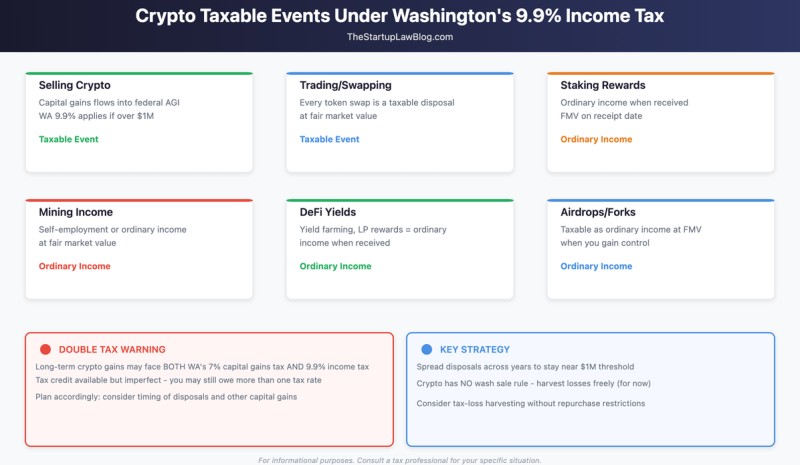
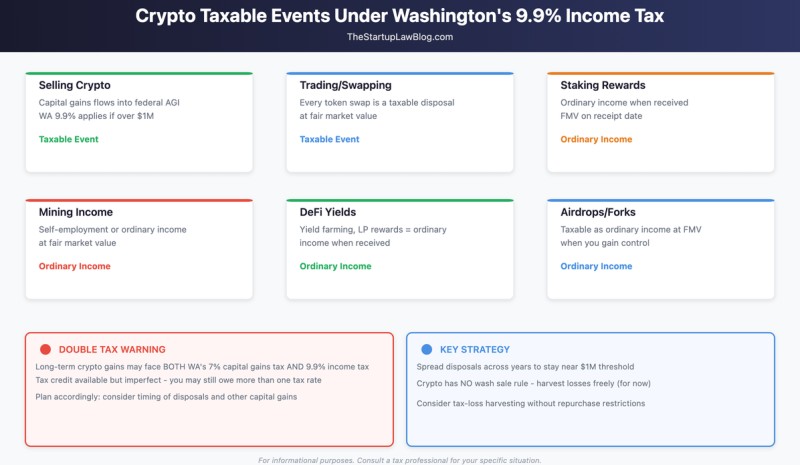
Washington State has a 9.9% income tax on federal AGI above $1 million, and a separate capital gains tax. Crypto disposals flow into AGI. Short-term gains taxed as ordinary up to 37% federal, long-term 0/15/20% federal. Both included in AGI subject to WA tax if over threshold. Planning across years helps.
New Zealand company tax on crypto profit is flat 28%. Individuals in top bracket 39% save by keeping profit in company, but dividends later taxed. Losses ring-fenced in company. Transferring crypto into company is a taxable event at market value. Foreign rules differ but holding time still matters.
Corporate Crypto Account And Funds
If you run a business, a corporate crypto account keeps coins separate from personal. The company pays tax on trades and may deduct costs. A cryptocurrency fund pools investor money and files its own returns. These structures change who reports the gain but not the hold-time rule.
Some bigger players look at fidelity and crypto custody for retirement plans. Others buy crypto stocks etf to get exposure without direct coins. Those are securities, not property, so wash sale and fund rules apply differently. Your direct coin hold still follows the property clock.
Capital losses offset gains; if losses exceed gains, deduct up to $3,000 per year against ordinary income and carry forward.
Losses Gifts Donations And Wash Sales
You report losses too. Disposal must be filed whether gain or loss. Losses might offset gains. If capital losses exceed gains, deduct up to $3,000 a year against ordinary income, carry extra forward. Crypto not under wash sale rule now, so you can sell at loss and rebuy fast to harvest. IRS may change this.
Gifts usually not taxed to receiver; later sale uses donor basis. Charitable donation to qualified group may deduct and avoid gain if held over a year. Using crypto as collateral is not taxable. Stablecoins taxed like other coins when you part ways, often small gain or loss. Keep it all recorded.
Non-taxable or exempt deals
- Buying crypto with fiat on exchanges or ATM
- Transfer between your own wallets or exchanges
- Holding without passive income or sale
- Crypto as collateral for a loan
Planning Around Your Tax Bracket For Crypto
Know your bracket to plan. Higher bracket: hold over a year for lower long-term rates. Lower income may hit 0% on long-term. Married status changes bracket. Track all deals with tools like CoinTracker or Koinly. Understand deductions, harvest losses, donate coins to cut bill.
Investors maximize long hold and dollar-cost average. Traders do frequent moves and need rigorous records. The wash sale rule doesn't apply to crypto now, so loss harvesting works. Consult a tax pro if you're a serious trader, DeFi user, or high net worth. They navigate the messy parts.

Common Questions On Crypto Tax
When do you pay? At taxable event: sell for cash, trade for other, spend on goods, or receive income from mining staking airdrops. Do you pay on loss? No, but report it. Under $600 still report gains; $600 only sets if platform issues 1099-MISC. IRS knows buys on CEX via forms.
How report? Schedule D and Form 8949 for disposals, Schedule 1 or C for income. Deadline is April 15. Receive gift or inheritance? Gift tax-free, later sale capital gains with donor basis. Mining value is income, expenses deductible if business. No wash sale rule for crypto currently.
Knowing your tax bracket helps plan investments. Higher bracket: consider holding >1 year for lower long-term rates.
Why Waiting Pays In The End
Your tax bracket for crypto mostly hinges on hold time. The source keeps saying it: sell after a year and you often get a nicer rate. I don't need a spreadsheet degree to see that. The patience play is boring but it leaves more coins in your pocket.
Hey, don't skip this part. If you're close to the one-year line, waiting a few weeks can drop you from 37% to 15% or less. That's real money. Track your dates now, not later when the IRS letter shows up. The whole trick is time, and time is the one thing you control.


Comments on “Why Your Tax Bracket For Crypto Depends On Holding Time (And Why Waiting Pays)”
No comments yet. Be the first to share your thoughts.